Immunkarte
Partner
Field
Duration
Roles
Context.
In early 2021, Germany's vaccination rollout was underway, but the federal digital vaccination certificate left a large part of the population behind. The CovPass app was the official answer. It was also inaccessible to large parts of Germany’s ageing, less tech-literate population, or after the smartphone battery died.
The window to build something meaningful was measured in weeks.
Why this.
Immunkarte was founded on the prediction that COVID-19 immunisation status might determine what people could access in their daily lives, at a time when this was still politically unthinkable. When an EU-wide certificate was eventually introduced, and everything from shops to theatres closed for people not carrying it, we listened to the feedback of our partner pharmacies to restore that access.
Problem.
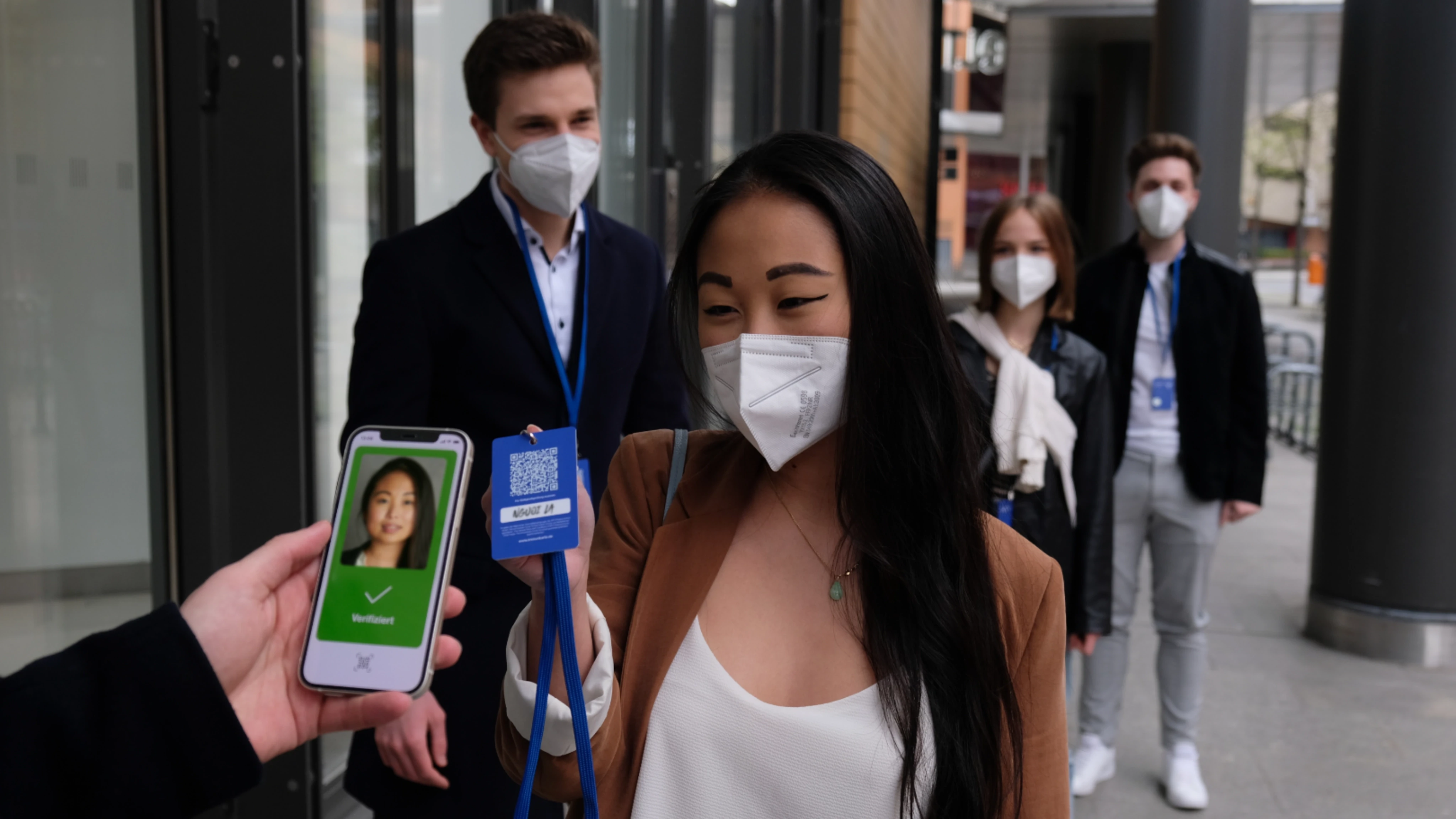
There was no easily accessible, durable physical carrier for the EU Digital COVID Certificate in Germany. Pharmacies, already the trusted point of contact for vaccination certificates, had no viable product to offer patients who couldn't use the app. Older patients in particular had no reliable way to carry proof of vaccination in a format that would hold up at borders, venues, and healthcare settings.
The problem wasn't technically novel. It was operationally enormous.
Constraints and complexity.
The situation compressed every dimension of a hard product build into a single sprint:
Regulatory complexity. The product had to be fully compliant with the EU Digital COVID Certificate framework, with QR code integrity and GDPR-compliant data handling that could withstand federal-level scrutiny.
Distribution at scale, immediately. The route to patients ran through Germany's pharmacy network. That meant designing for 10,000+ independent operators with wildly varying levels of technical sophistication, no uniform infrastructure, and no tolerance for friction.
No runway for iteration. The window for product-market fit was defined by an external event, the end of pandemic restrictions, not by commercial traction. There was no time to learn, fail, and try again. The system had to work end-to-end from day one.
Identity and trust. In healthcare, particularly for an ageing demographic, visual trust signals are core functionality. The product needed to feel safe, official, and simple.
What we did.
We co-founded APO Pharma Immun GmbH and took responsibility for the entire product and technology surface, from naming and identity through to the operational systems pharmacies used to issue and activate cards.
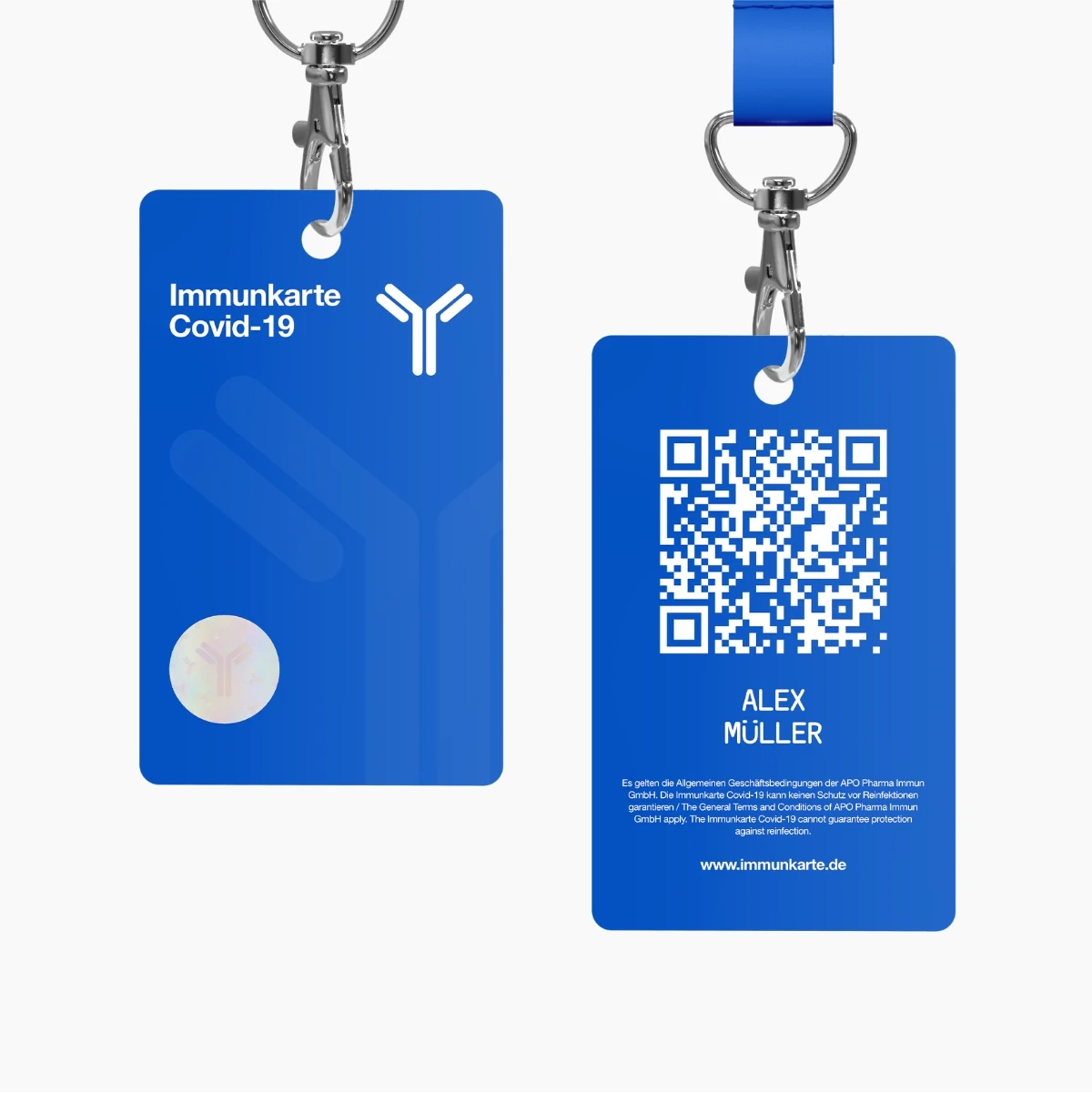
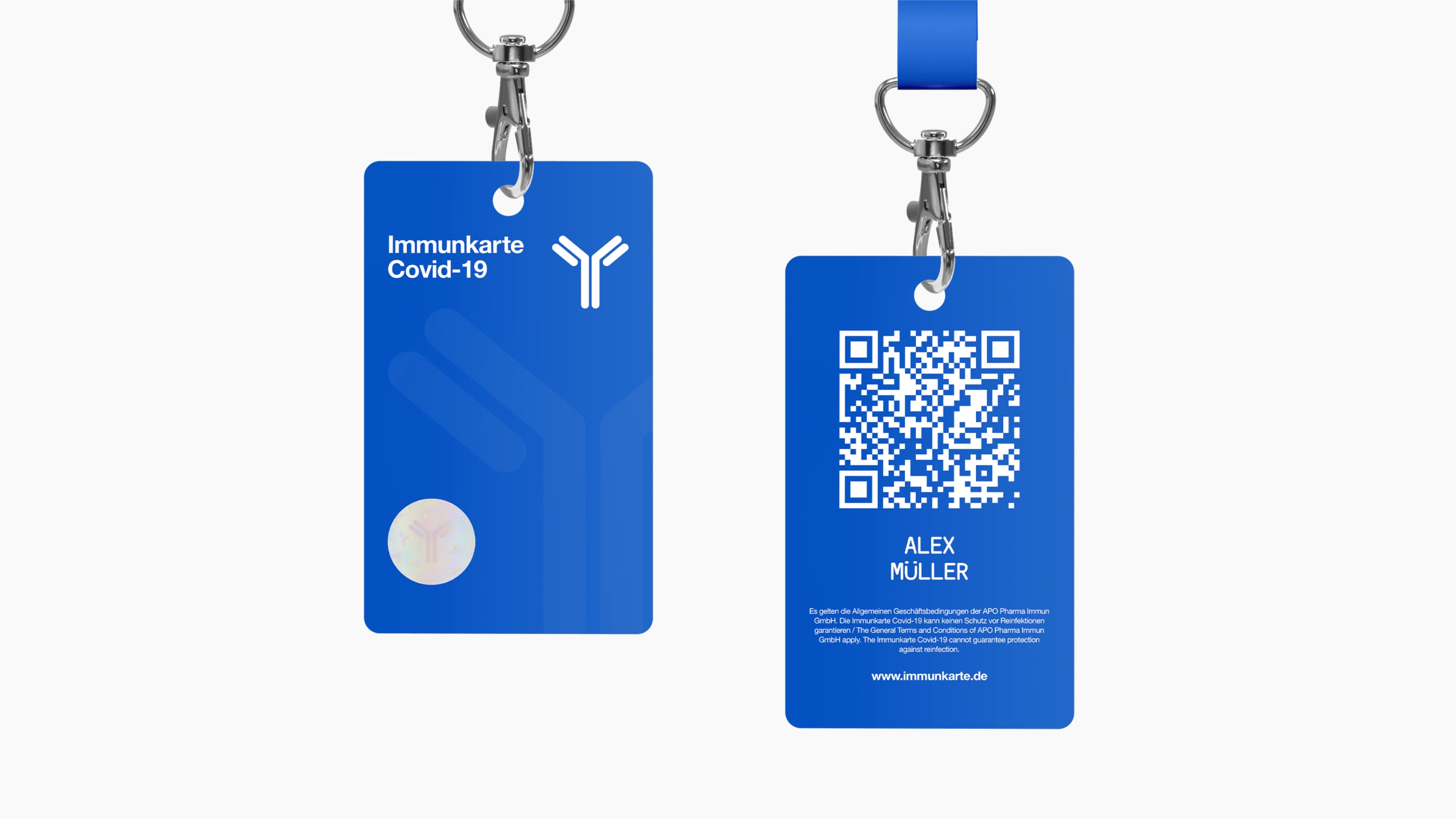
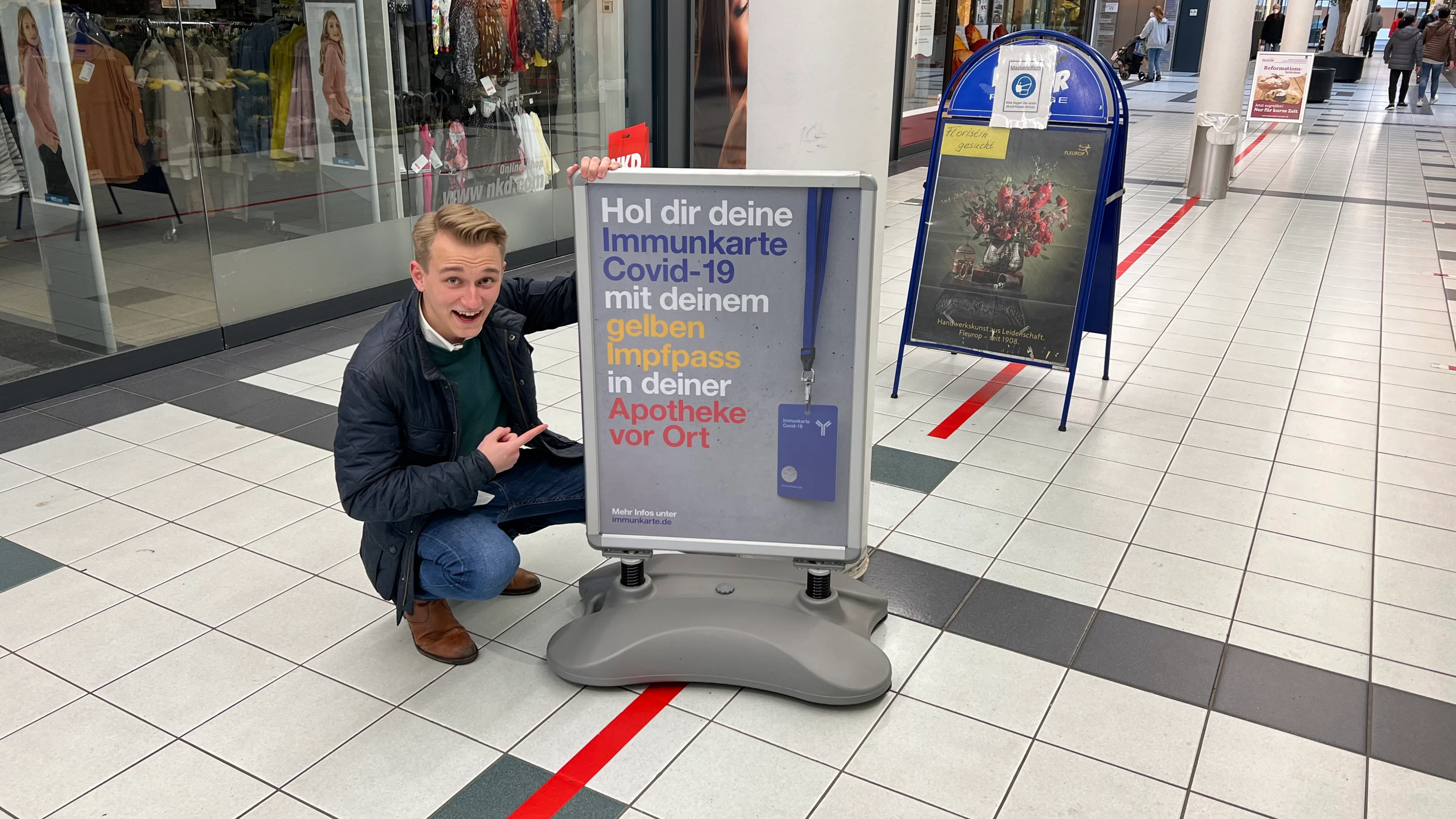
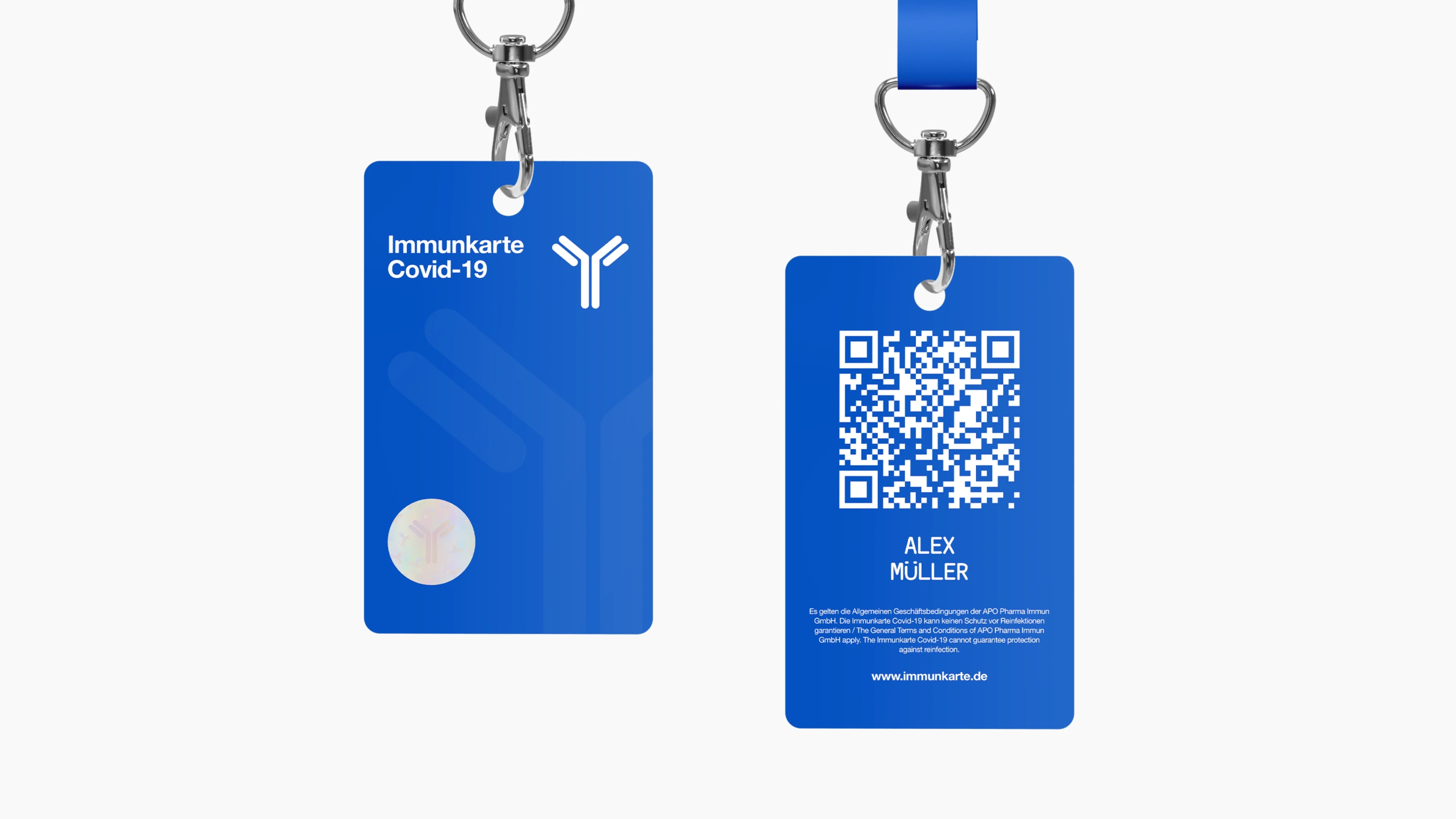
Product and naming. We created the Immunkarte® name and positioned it explicitly as a physical, trustworthy alternative to the app: not a workaround, but the right solution for a specific and underserved user.
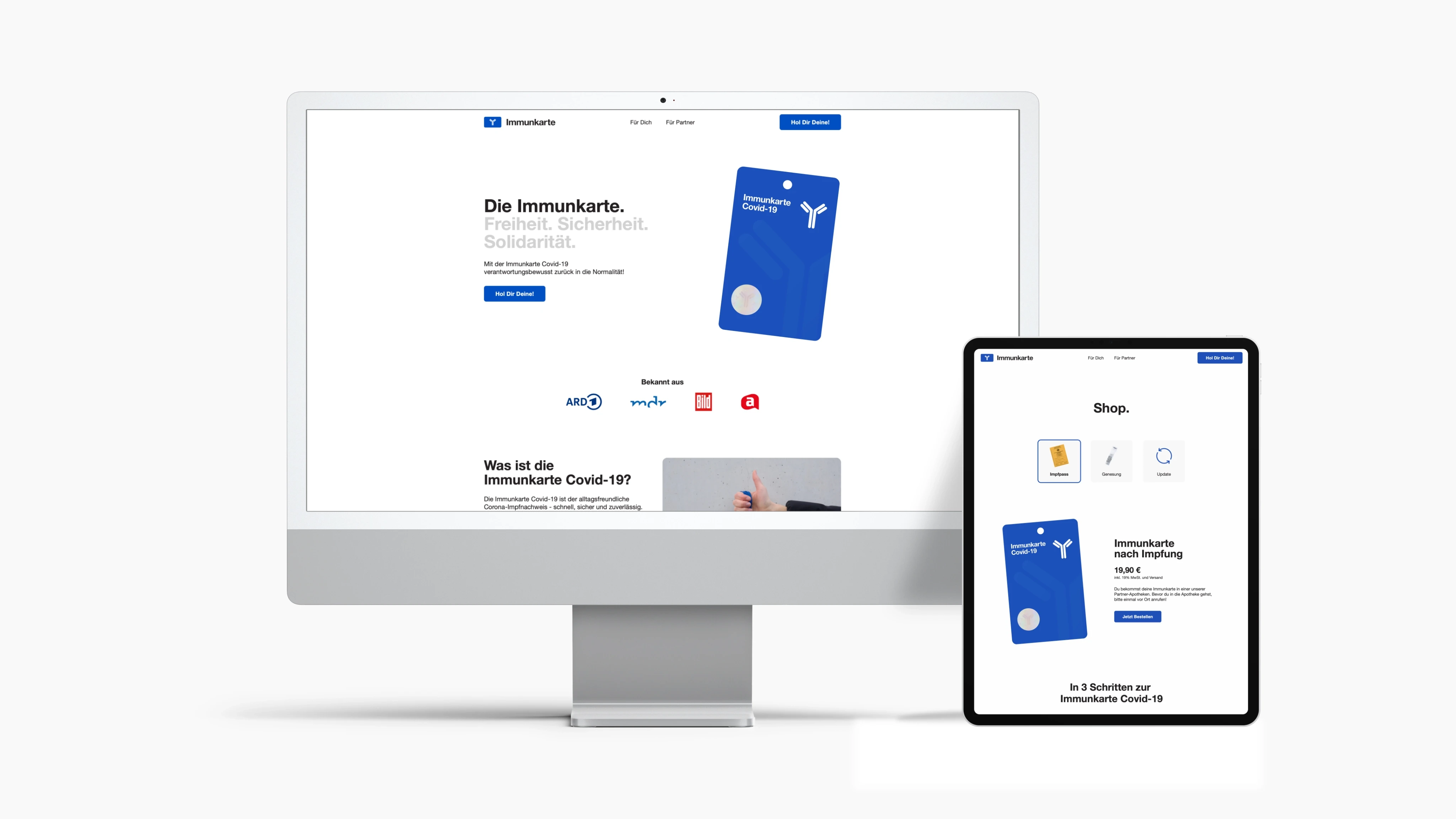
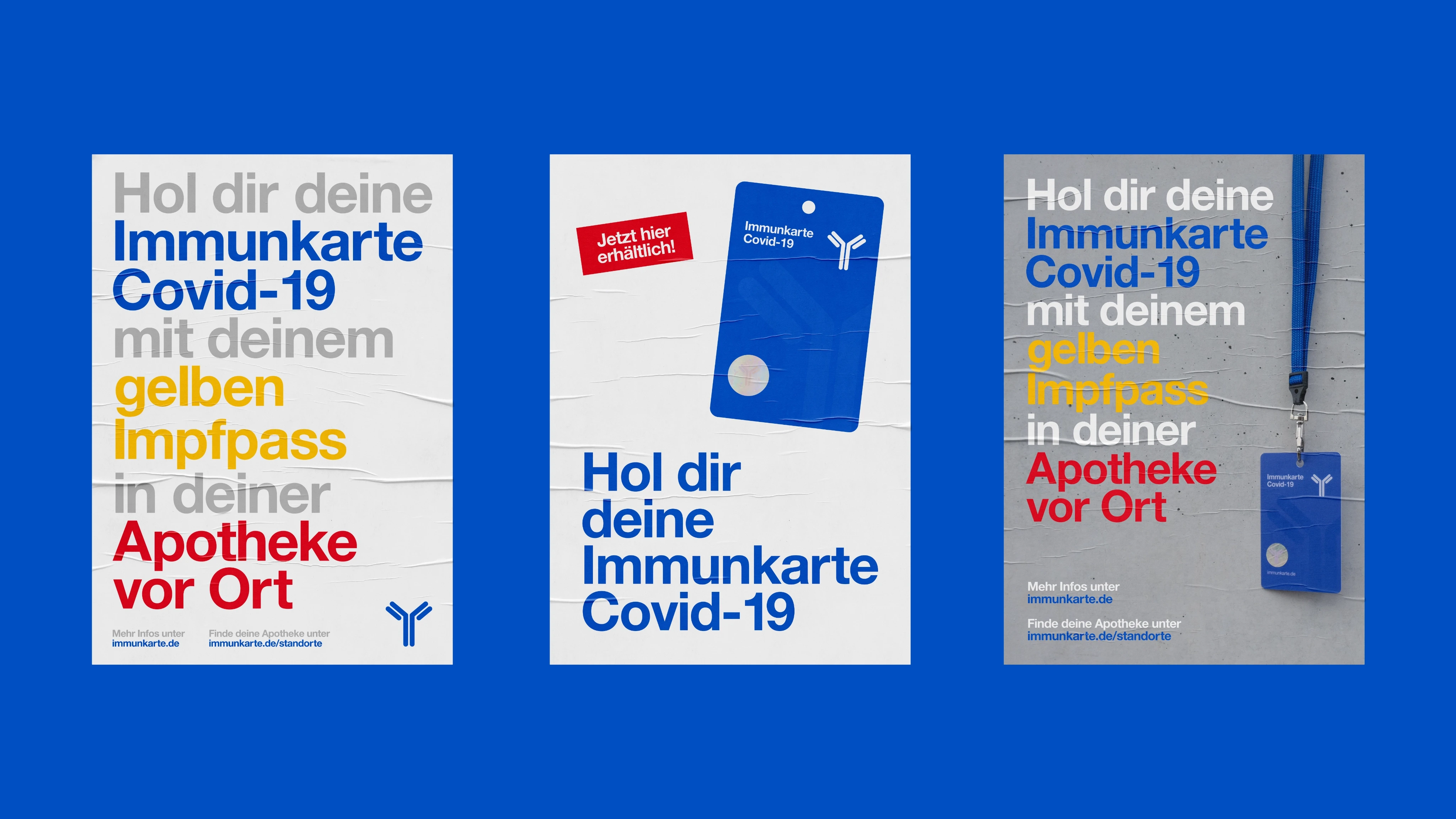
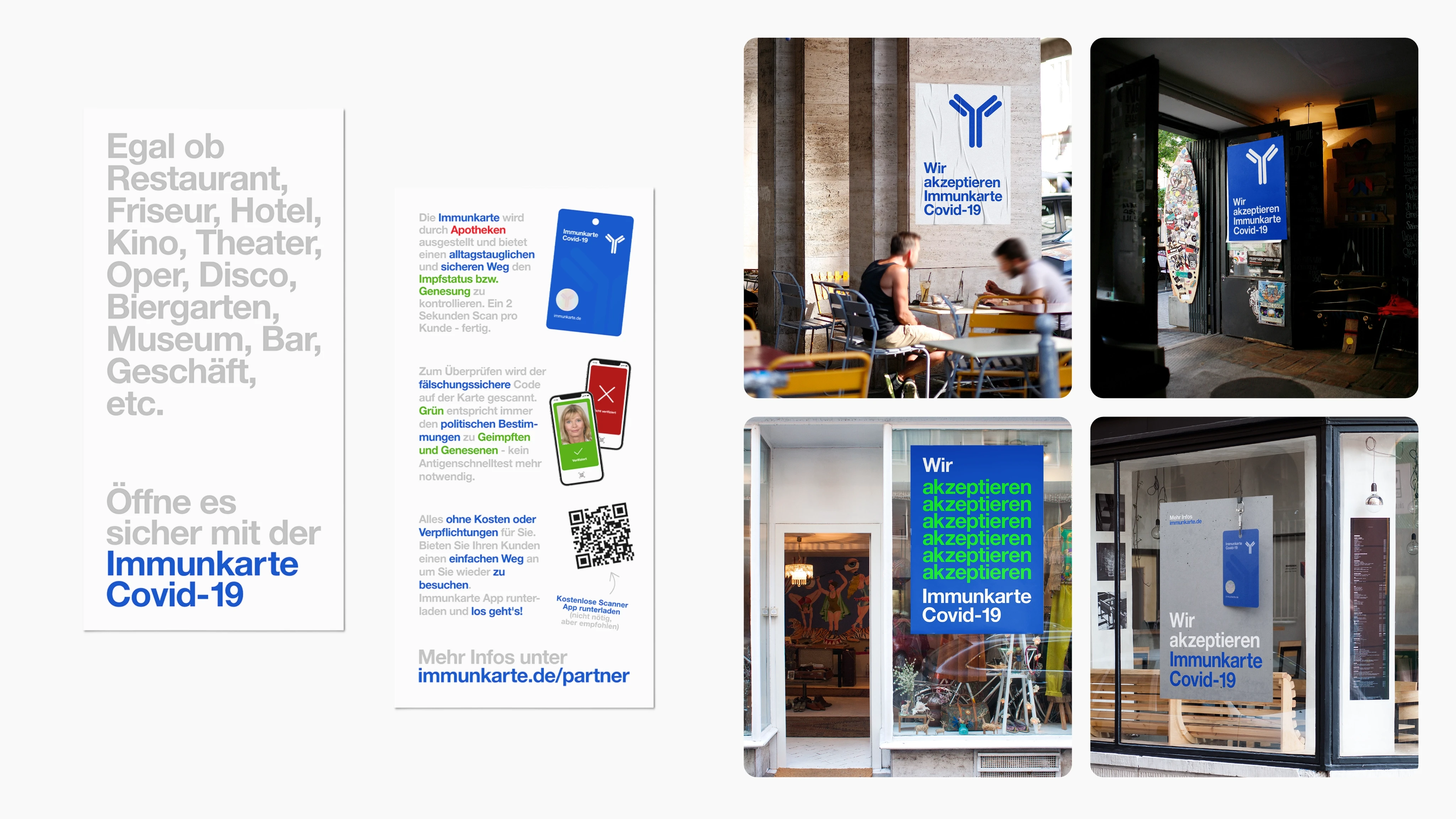
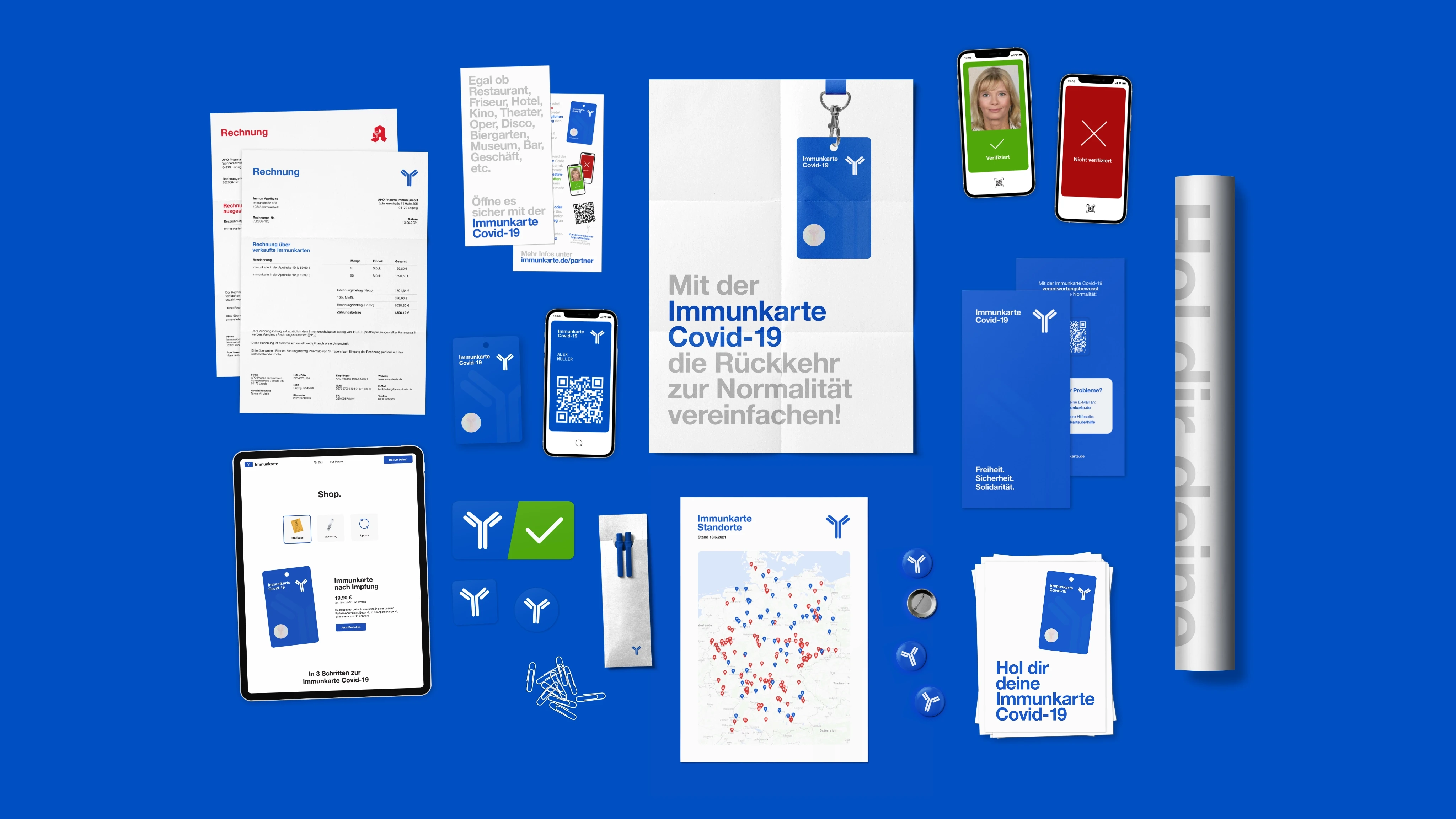
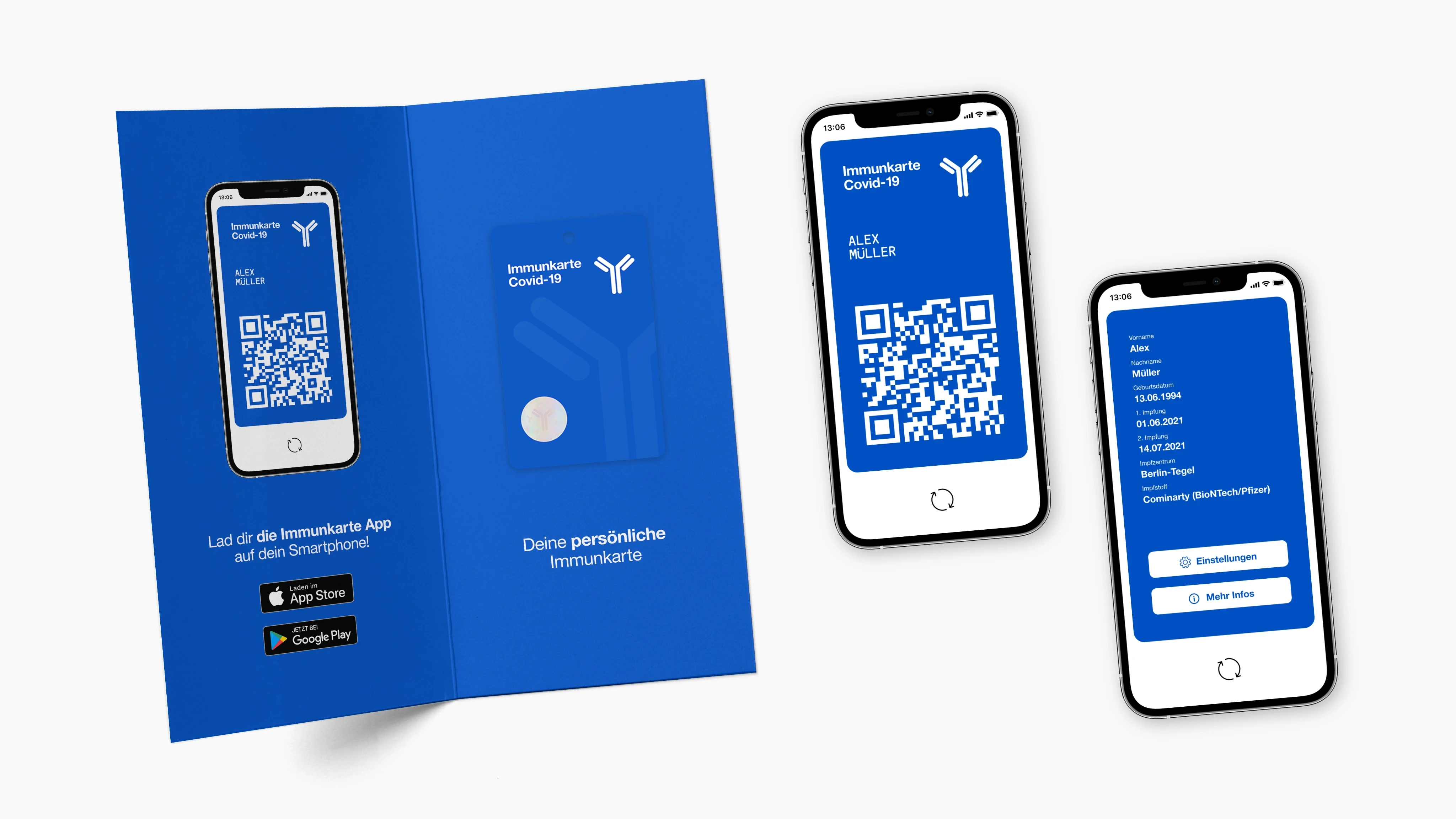
Identity and design system. We designed everything needed to build and run the business: the visual identity, packaging, print systems, and all digital touchpoints. The work earned a Special Mention at the German Design Award in late 2021.
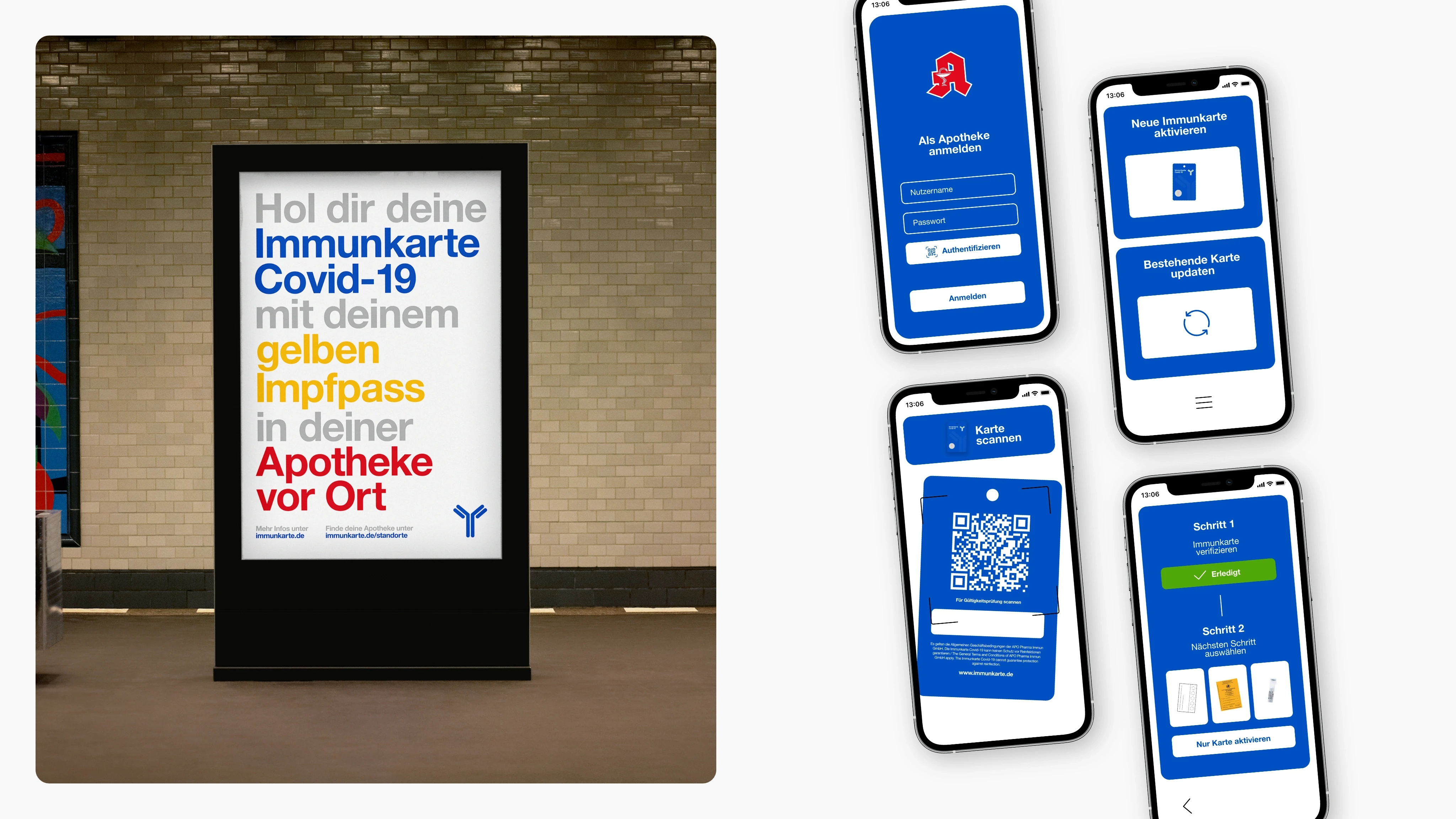
Technology infrastructure. We led development of the Immunkarte® Operator mobile application and Immunkarte® Dashboard: the systems pharmacies used to verify eligibility, issue cards, and manage fulfilment at volume. The system was deployed to over 10,000 points of distribution and built to absorb demand from day one.
Distribution architecture. The entire operational model, how pharmacies onboard, how cards are issued, how edge cases are handled, was designed alongside the product. Distribution was a design problem as much as a logistics one.
Outcomes.
By December 2021, Immunkarte® was selling over 100,000 cards per day, generating more than €1 million in daily revenue with only an 8-person in-house team. Shortly after, the company grew to 50 people. By early 2022, more than 5 million Immunkarten had been distributed through 10,000+ pharmacies across Germany, yielding €50m+ in gross revenue in the first year of business.
The product became the standard physical carrier for COVID vaccination proof for those unable to use the federal app, and helped smooth Germany's transition into a post-restriction environment.
The German Design Award Special Mention validated not just the visual work, but the broader design thinking behind a product built for accessibility and trust at scale.
Lessons.
Speed and rigour are not opposites. The build was fast and still clean because the architecture decisions were made clearly and early. Ambiguity is slow. Well-defined constraints enabled pace.
Distribution is a product problem. The Immunkarte succeeded because the pharmacy rollout was treated as a product design challenge from the start, not handed off to operations after the fact. Every friction point in the pharmacy workflow was a design and engineering problem.
Trust is a system property. In healthcare, the product is only as strong as the trust it generates: from the patient holding the card, to the pharmacist issuing it, to the institution accepting it. That trust had to be designed into every layer: the name, the visual language, the data handling, the onboarding flow.
Founder-level ownership changes what's possible. There was no handoff between strategy, design, and engineering. The same people who decided what to build built it. That integration is what made scaling to over €1m in daily revenue achievable within a single year.