Floy
Partner
Field
Duration
Roles
Context.
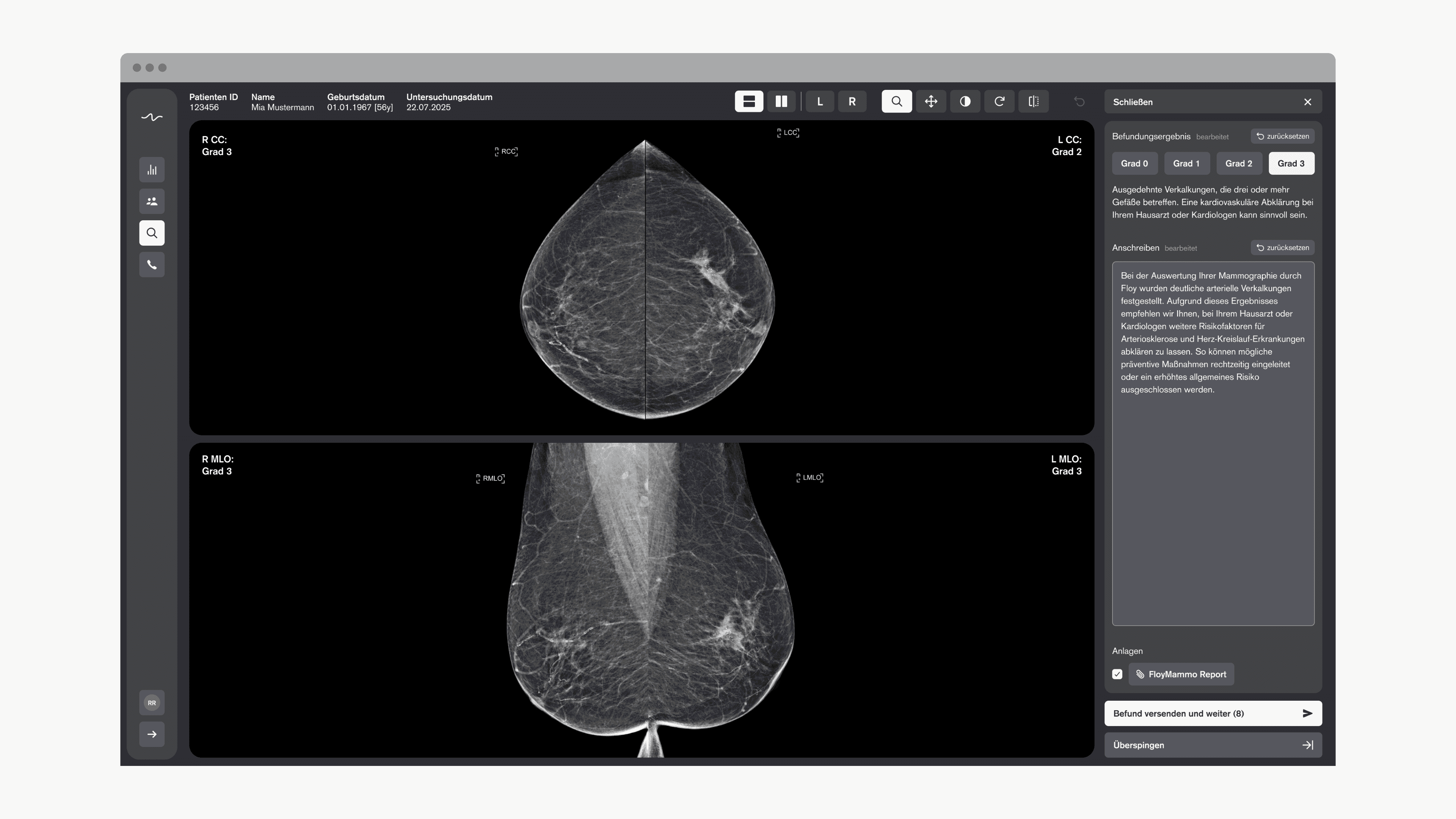
Floy is a Munich-based medical AI company specialising in opportunistic screening, using radiology scans that are already being taken to detect conditions that fall outside the primary clinical question: Osteoporosis from a spine MRI. Cardiovascular risk from a breast cancer screening mammogram. Findings that are uncommon, hard, or impossible for human radiologists to detect during clinical routine.
It's a genuinely hard problem in one of medicine's most regulated, liability-sensitive environments. Malpaux's involvement with Floy began shortly after the company was founded in 2021, establishing the foundations the business would be built on. When we returned in early 2024, Floy had clinical traction, but the systems underneath the product hadn't scaled with the ambition.
Why this.
Making something even 1% better at Floy means that 1% of people scanned may walk away with a diagnosis that significantly helps them to a better quality of life.
Problem.
The 2021 engagement was about establishing foundations: a brand identity that could carry a serious medical AI company, a technical architecture capable of supporting clinical-grade AI systems, and the early hiring that would determine what Floy could build.
By 2024, Floy had grown significantly, but into a structure that was no longer fit for where it was going. The product was running. The AI was clinically validated. But the organisation, the engineering architecture, and the visual identity had all accumulated the kind of debt that comes from moving fast through the seed stage without pausing to redesign the foundation.
Product teams were fragmented. The development process lacked coherence. Existing products needed to be rebuilt, not just maintained. New AI models were in the pipeline, but the infrastructure to build and ship them reliably wasn't in place. The brand established in 2021 no longer matched the company Floy had become.
The challenge wasn't any single one of these things. It was all of them at once, with a live product in the hands of clinical customers and no margin for disruption.

Constraints and complexity.
Regulatory environment. Floy’s AI in Europe is subject to EU MDR certification up to Class IIb, one of the most demanding conformity requirements in the regulatory landscape. Every product decision carries clinical and legal weight. Rebuilding systems in this environment requires precision, not just pace.
Clinical continuity. Floy's partners, over 200 radiology offices scanning hundreds of patients daily, couldn't experience downtime or quality degradation during a structural overhaul. The rebuild had to happen around a running system.
Organisational fragmentation. The existing team structure had grown organically and wasn't designed for the product complexity ahead. Restructuring teams, roles, and working rhythms while maintaining output required careful sequencing and a high level of trust with the founding team.
Identity coherence at a growth inflexion. A rebrand at this stage is a signal to customers, partners, and investors about where the company is going. The new identity had to be distinctive enough to stand out in a clinical market while projecting the credibility required to survive scrutiny from procurement teams and radiologists.
What we did.
Malpaux's work at Floy spans two distinct chapters, connected by the same founding relationship and the same level of embedded ownership.
2021–2022: Founding the Foundations.
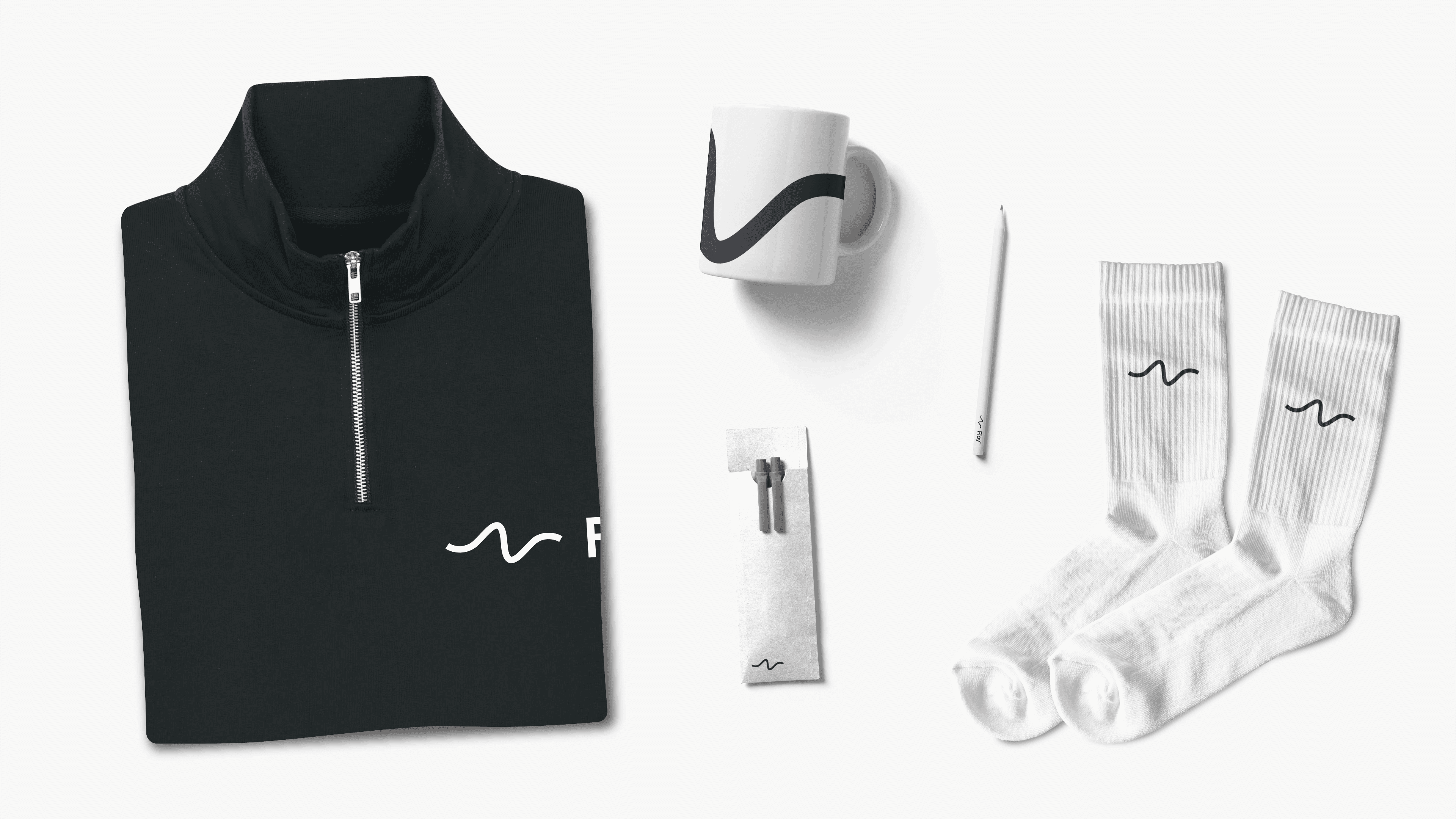
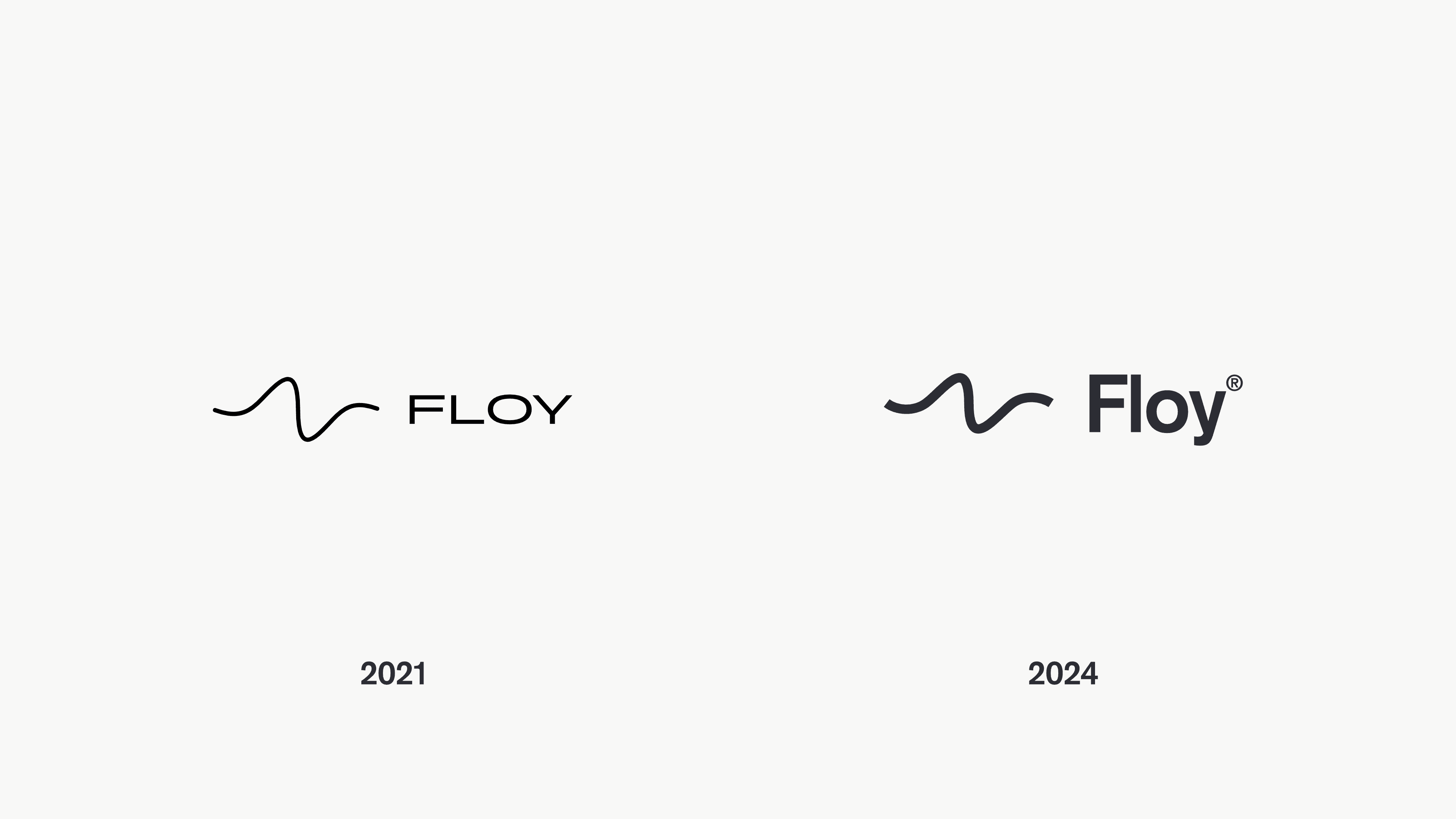
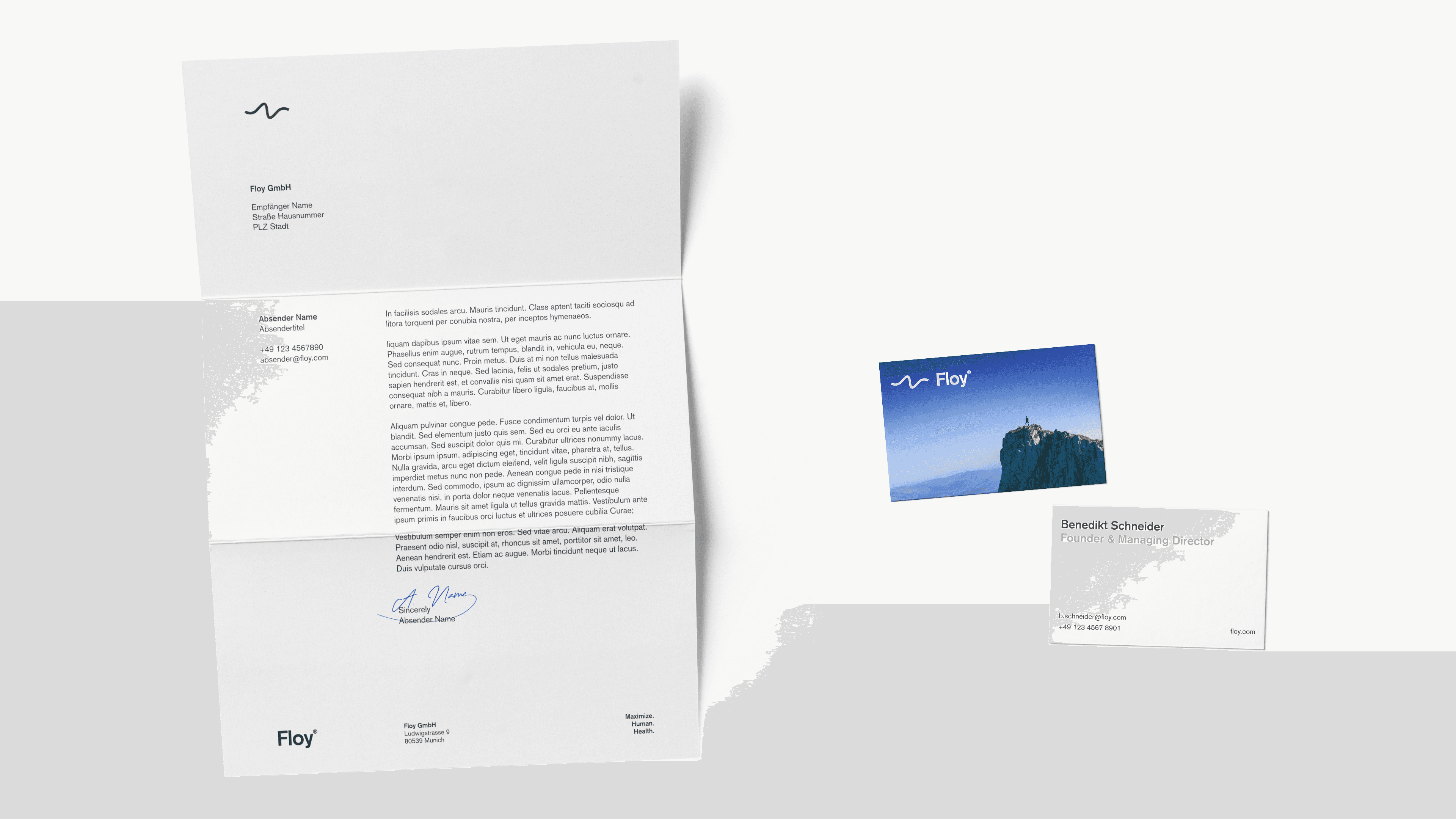
Brand and identity. Shortly after Floy was founded, we established the visual identity that would carry the company through its early clinical and commercial growth, including the Floy wave logo, which became the company's most recognisable mark. The identity was designed to hold up in clinical settings, investor rooms, and partner conversations simultaneously: a medical AI company that looked like one.
Technical architecture. We designed the foundational technical architecture that Floy's early product would be built on, making the decisions that would determine what the engineering team could ship and how quickly they could iterate.
Key technical hiring. We helped identify and bring in the first key technical people at Floy.
2024–present: Rebuilding for scale.
Malpaux returned in early 2024 as Interim CTO and Interim Creative Director simultaneously. The two roles weren't separate workstreams. They were the same intervention from different angles.
Organisational redesign. We migrated Floy to a squad-based structure, establishing end-to-end product responsibility to close test-to-clinical performance gaps and eliminate bottlenecks in individual contributors or the founding team. This was a prerequisite for everything else.
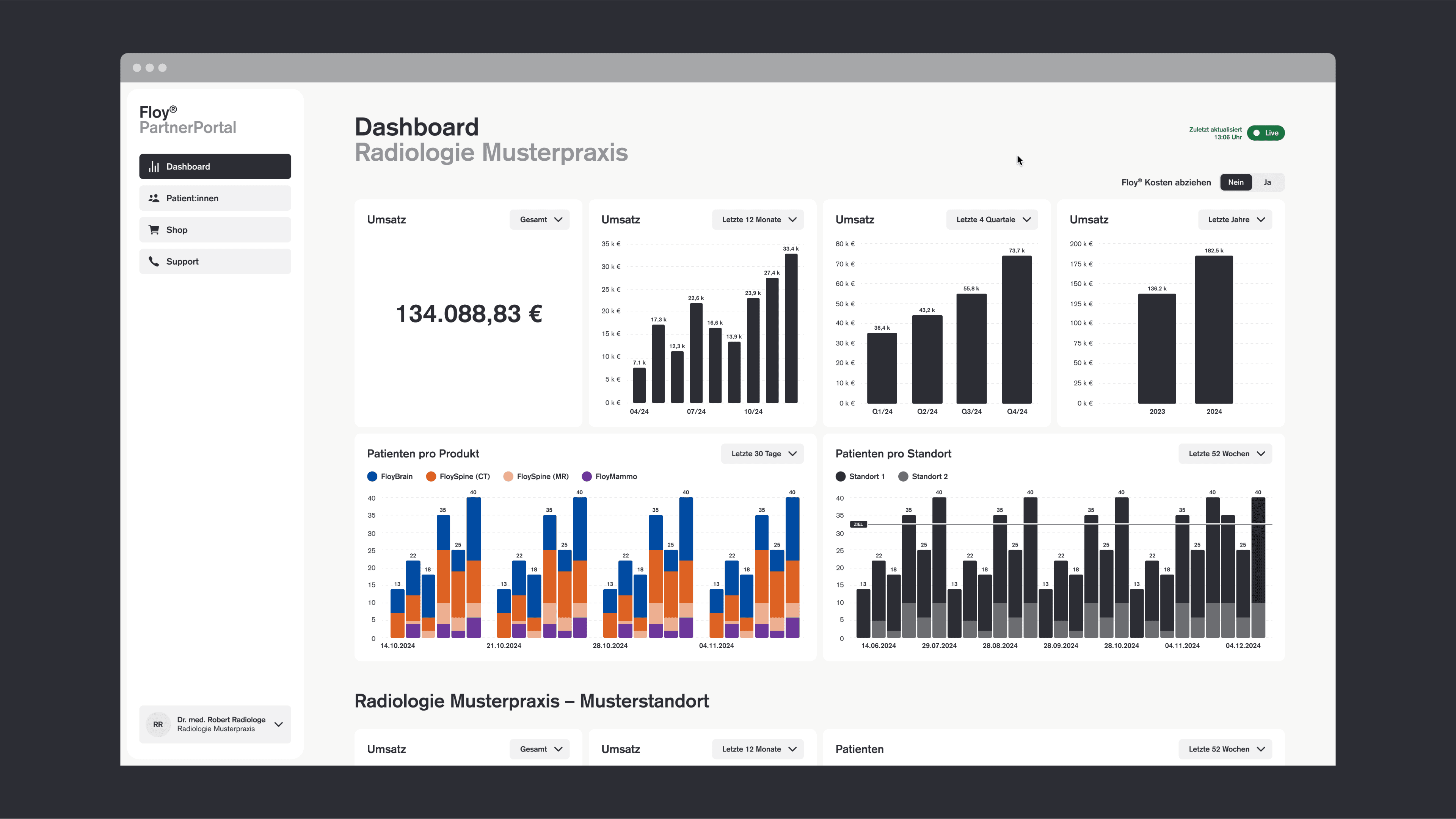
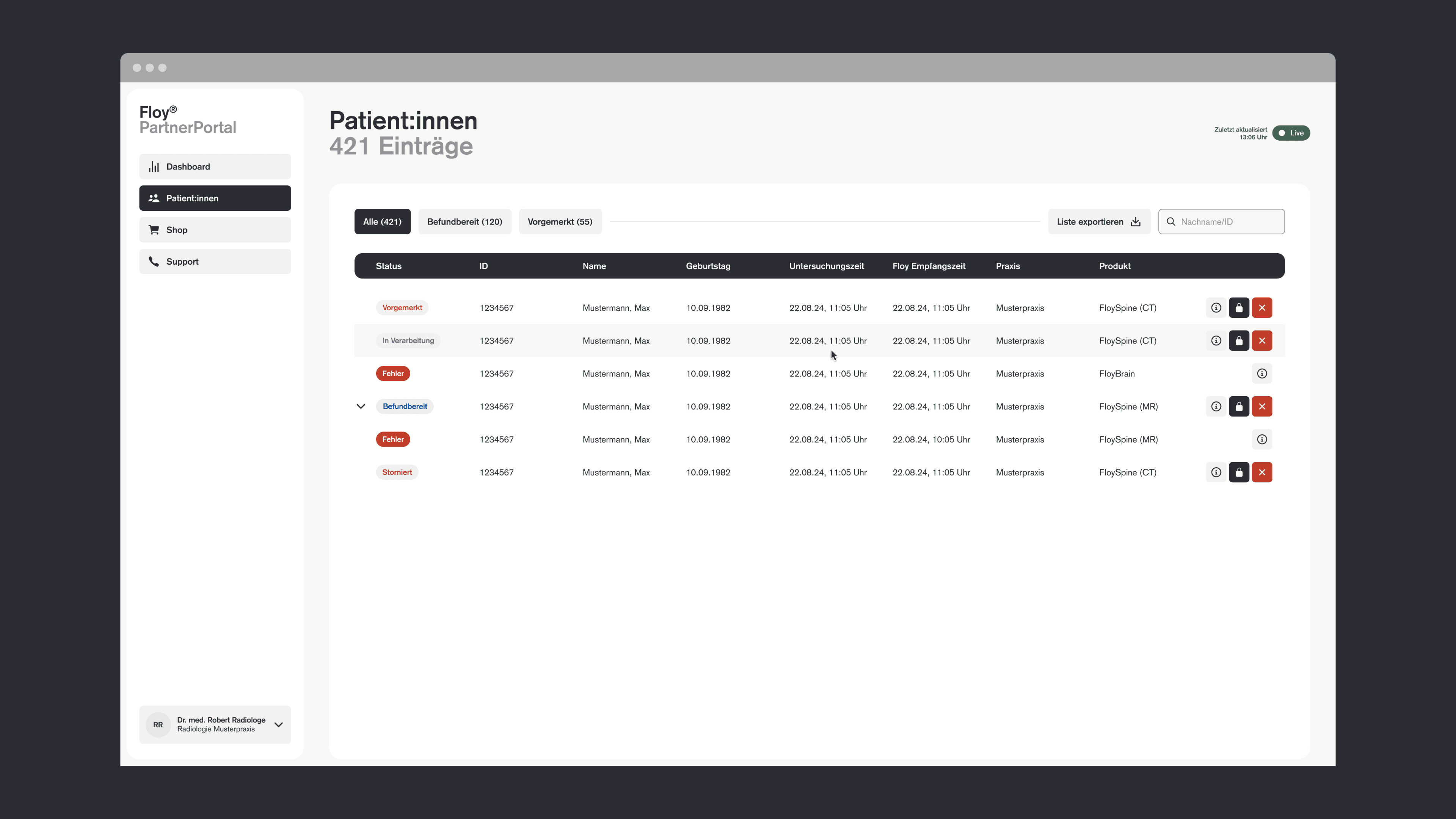
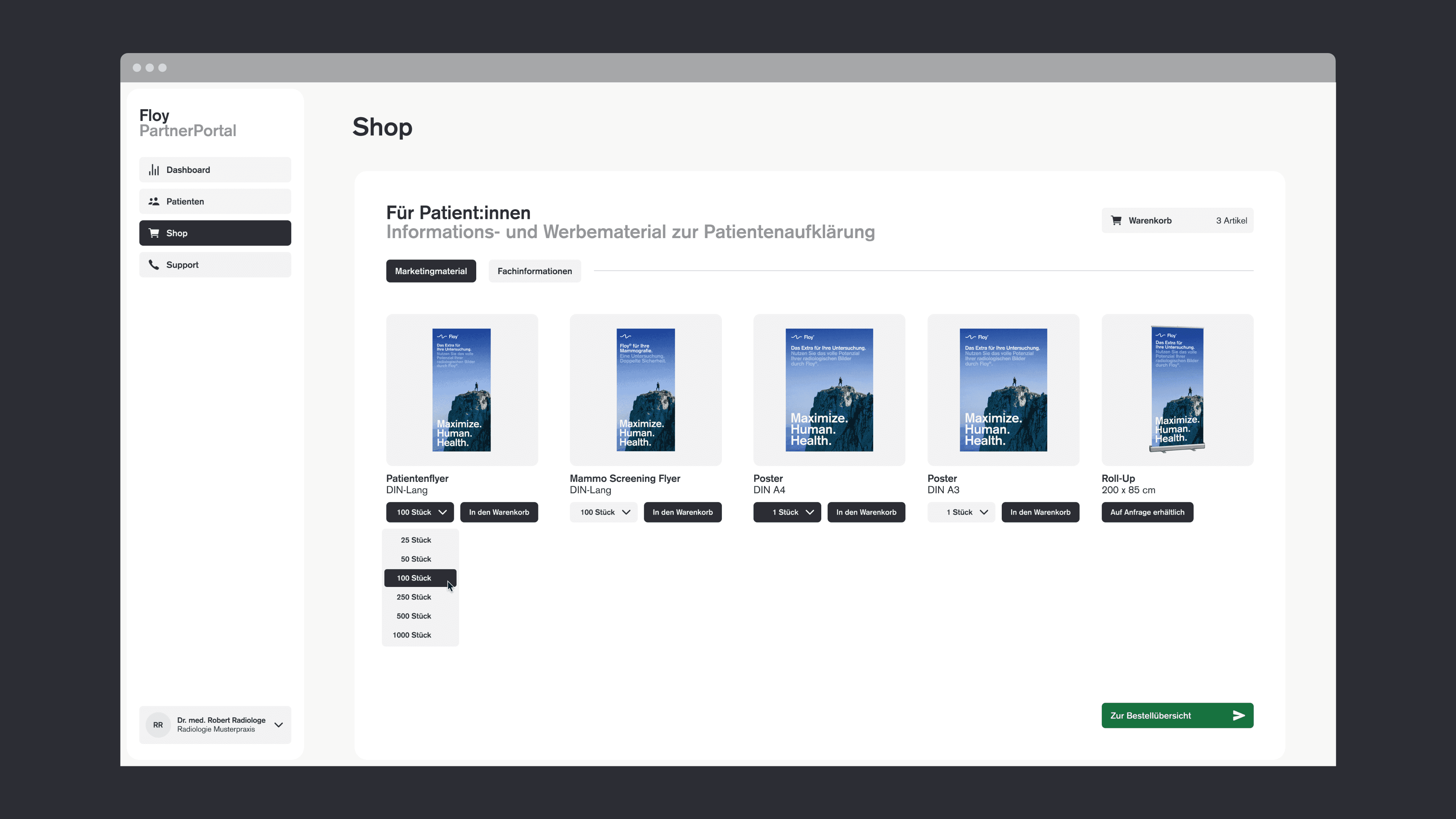
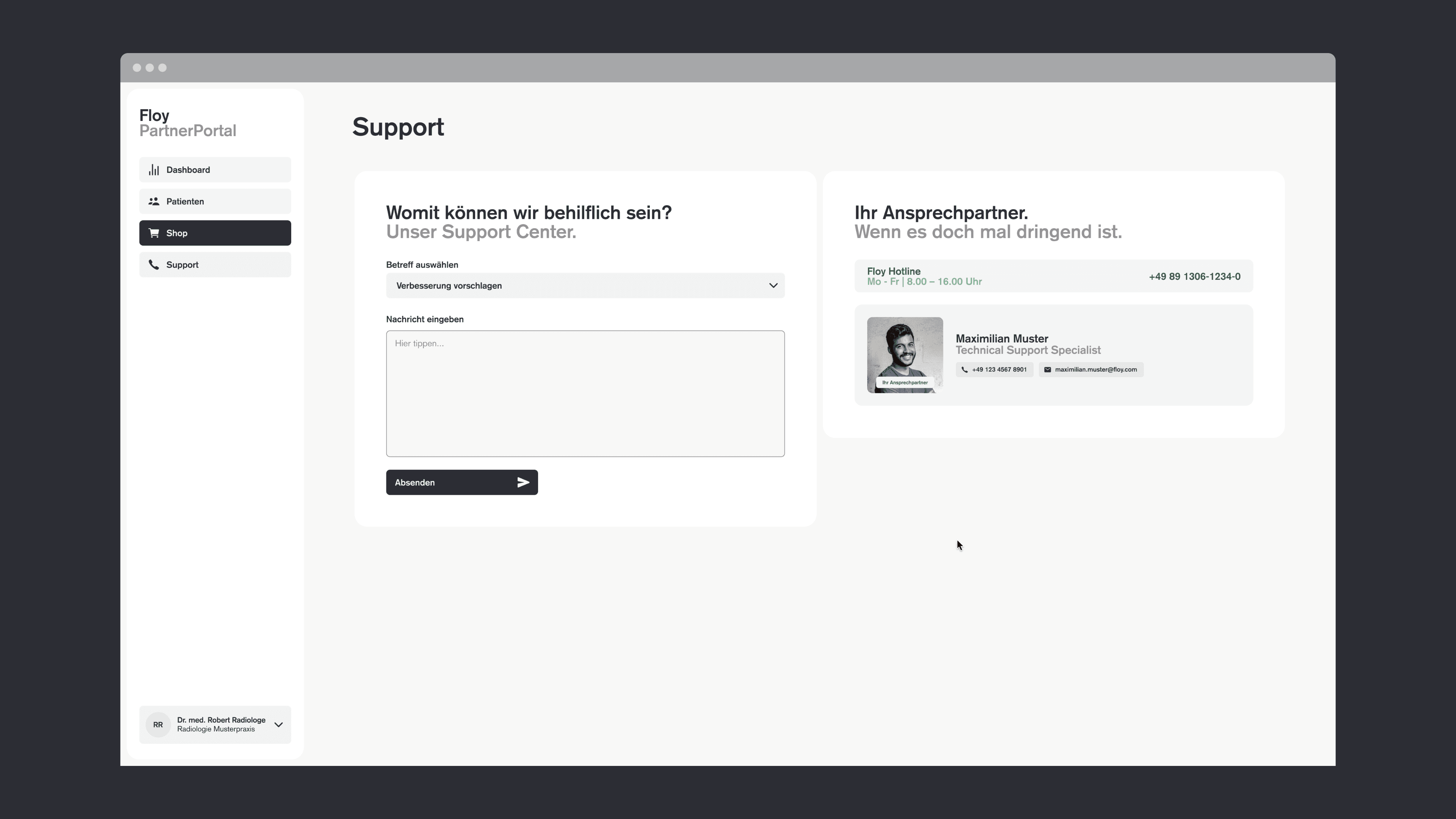
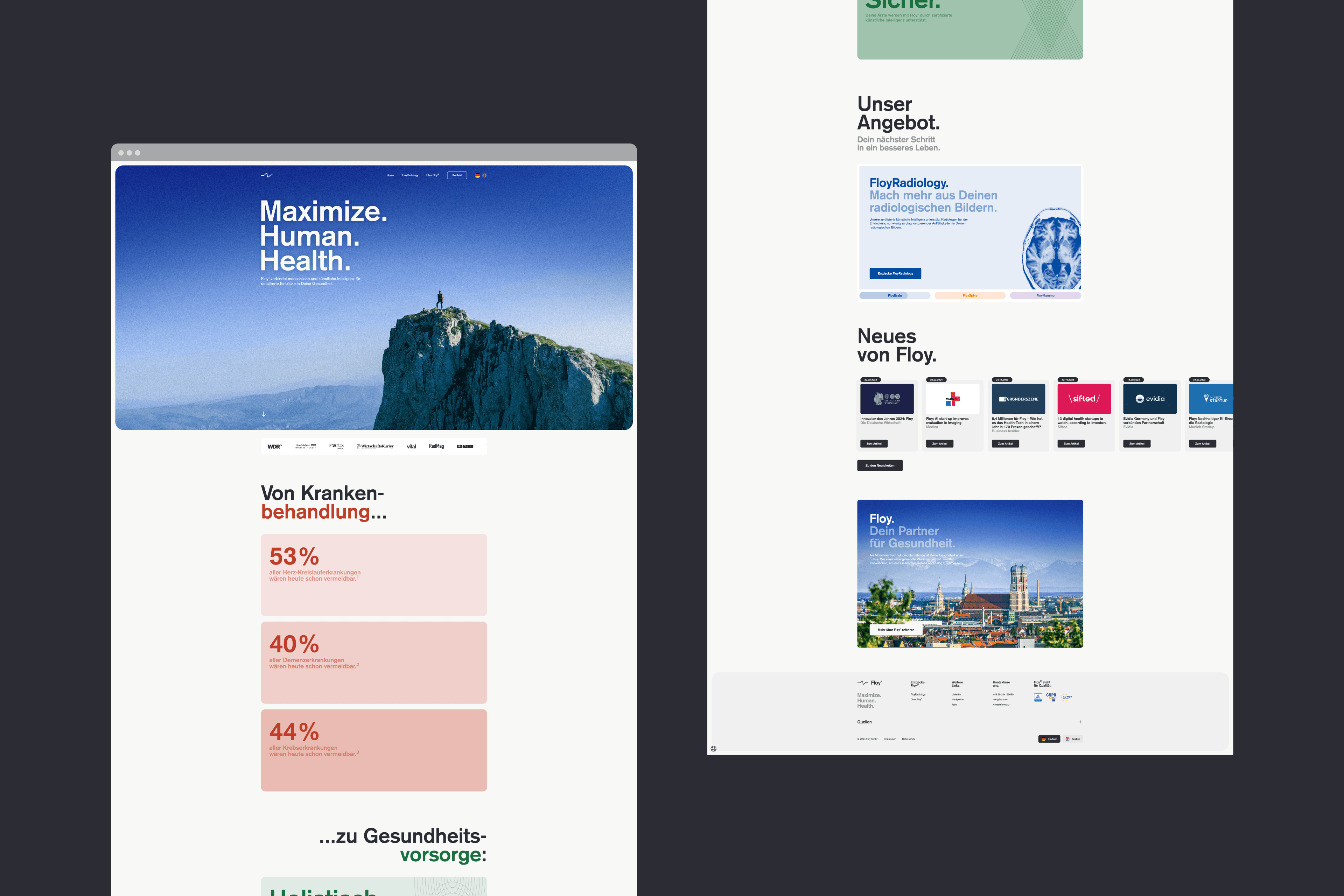
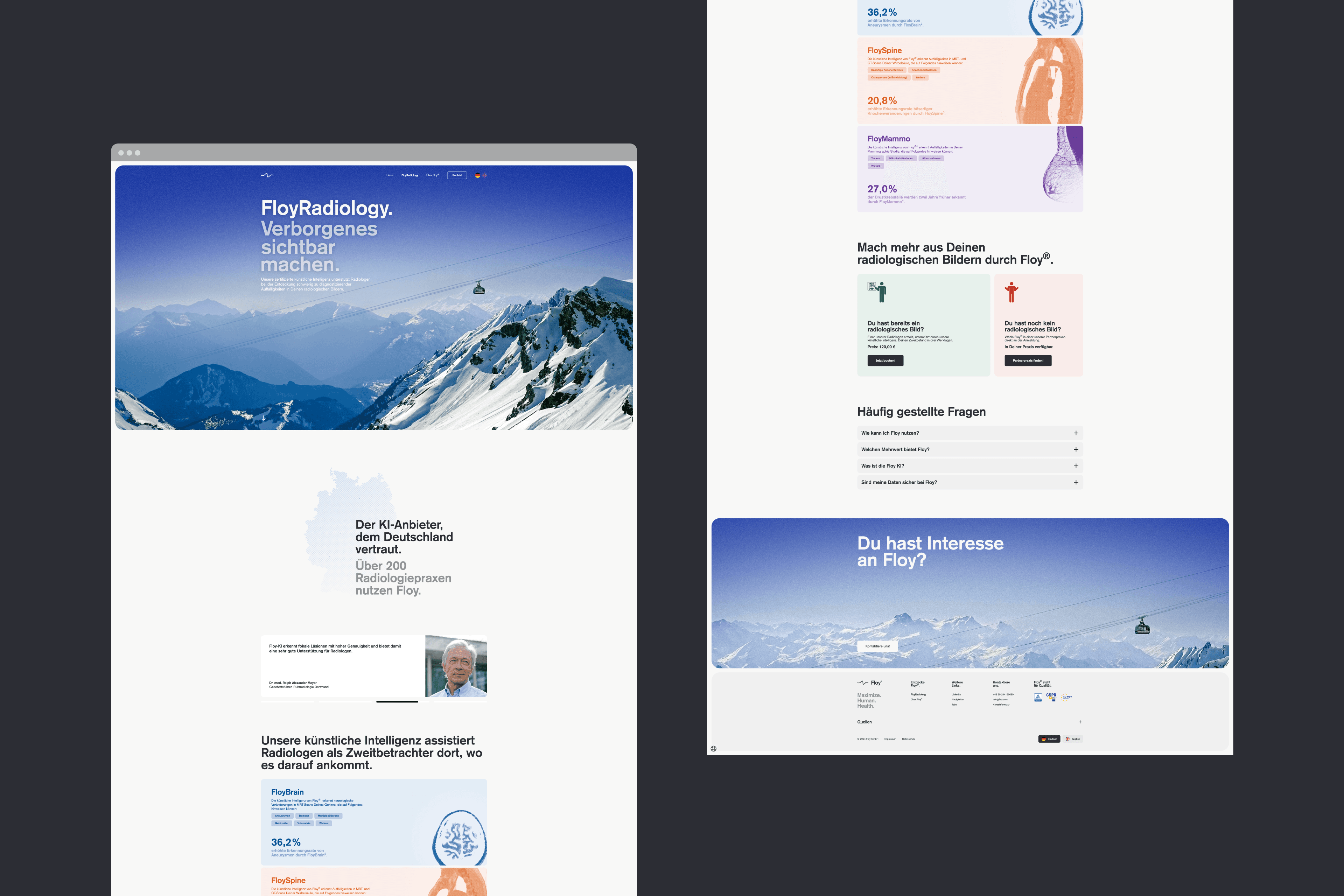
Product and engineering rebuild. All existing products were rebuilt to more closely match clinical expectations and to support the modelling pipeline and the clinical complexity ahead. We led the development of numerous new AI models and a rearchitected integration system, built Floy’s user-facing Partner and PatientPortals from scratch, and completed a holistic infrastructure redesign and migration to AWS. Following the migration, Floy passed AWS's Foundational Technical Review (FTR) and was accepted as an AWS partner.
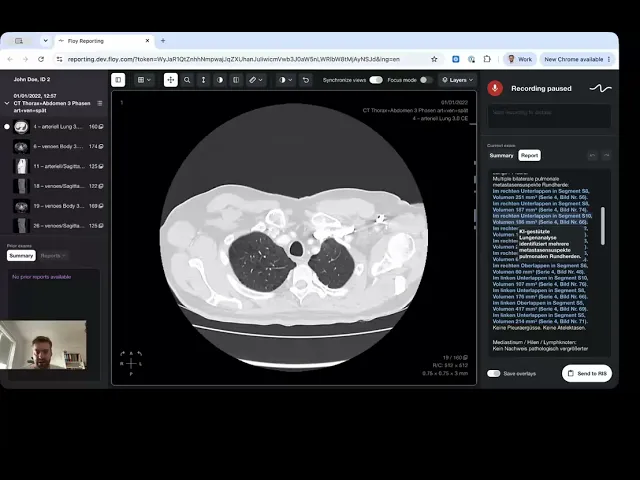
Reporting Viewer prototype. Alongside the core rebuild, we developed a working prototype of a next-generation reporting environment. It combines a fully featured DICOM viewer with an integrated reporting interface, a pairing that remains uncommon in the German market where PACS and reporting tools are typically separate systems. Built into this web-based environment, we included LLM-based report structuring and drafting that synthesises findings from prior exams alongside results from Floy's point-solution AI models, as well as voice-based report revision with SpeechMike integration. Additionally, we demonstrated visual grounding of AI-detected and radiologist-dictated findings directly within the image viewer. The complete prototype was built and delivered in two weeks, then demonstrated at RöKo 2026 in Leipzig, Germany's largest radiology congress. A demo video of the reporting viewer went on to reach >40k impressions on LinkedIn.
Foundation model research. In parallel, we picked up an ongoing research collaboration with the German Cancer Research Center (DKFZ) as part of the Human Radiome Project (THRP), focused on radiology foundation models and initiated Floy’s own foundation model research, including an MR head foundation model trained on over 175,000 studies – more than 11 million MRI slices – that forms the basis for Floy’s new MR head production models.
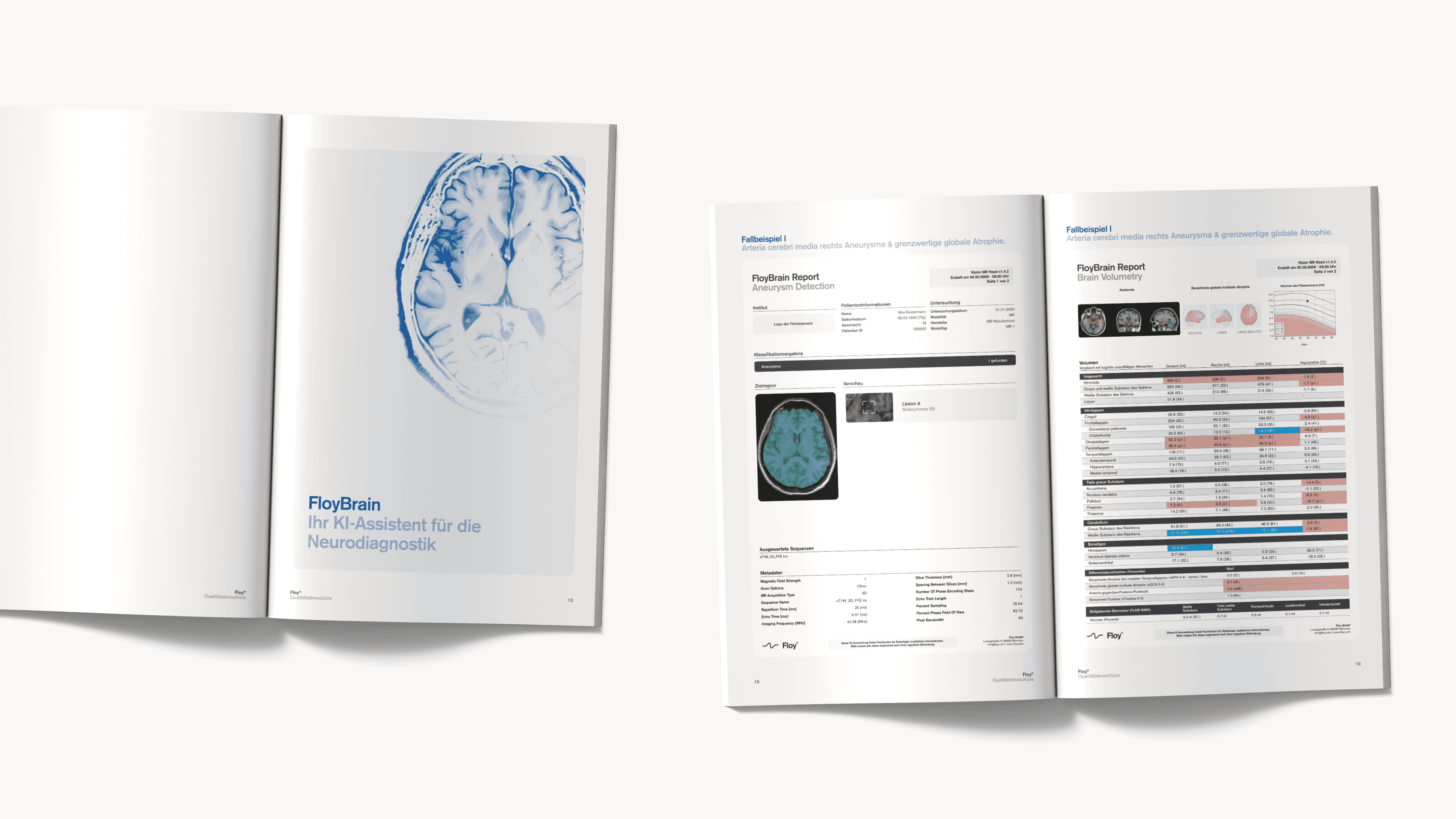
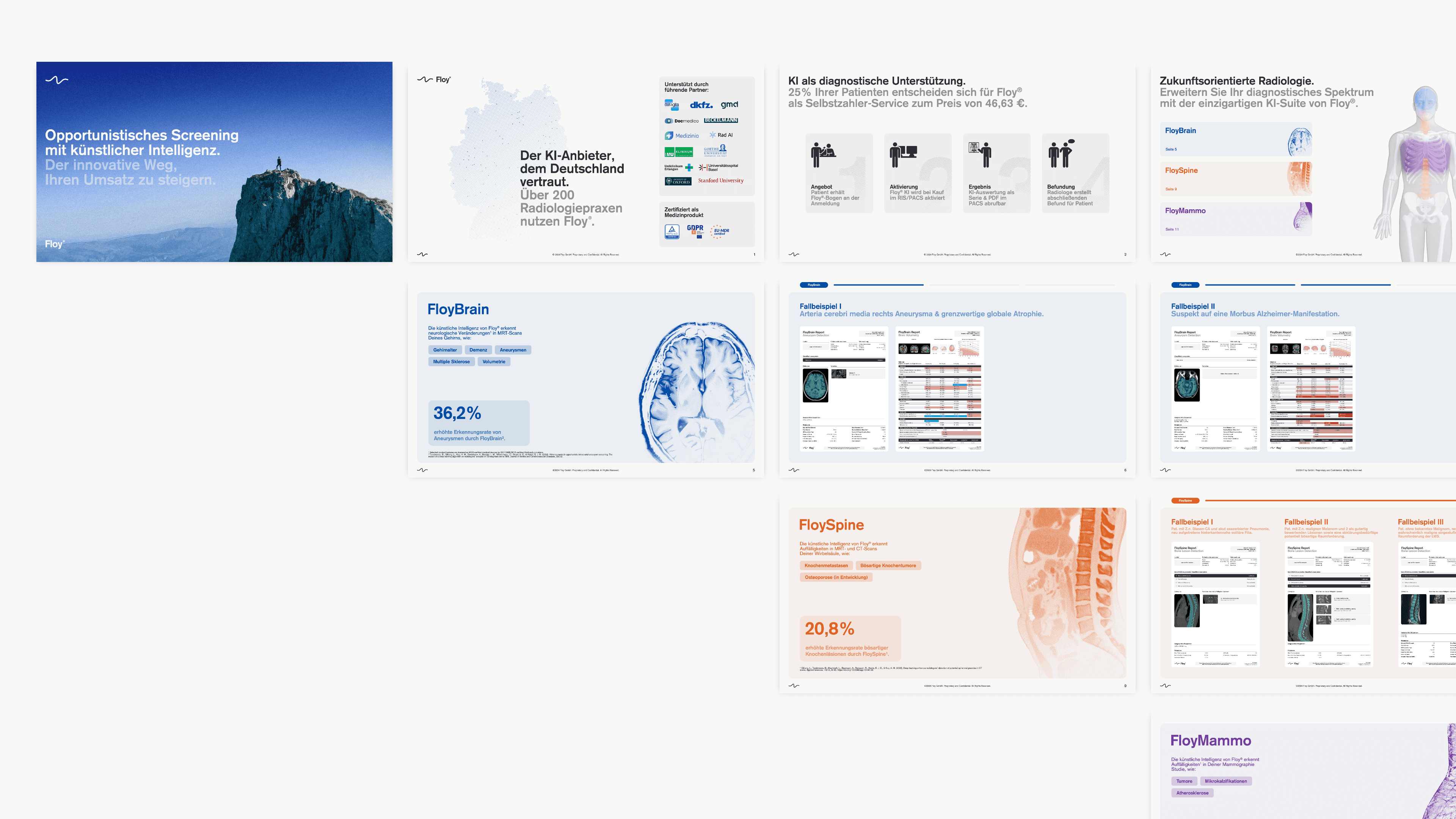
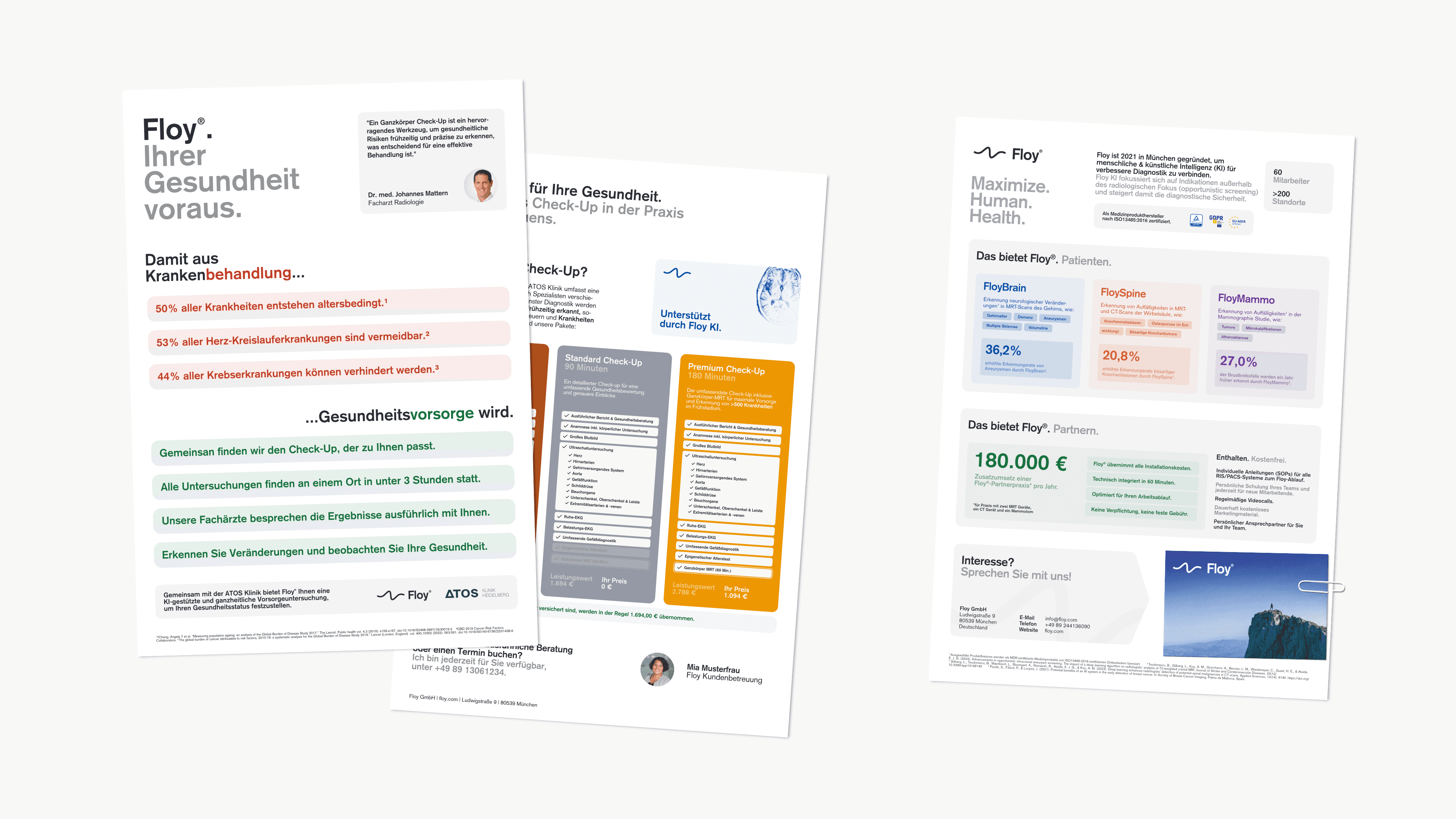
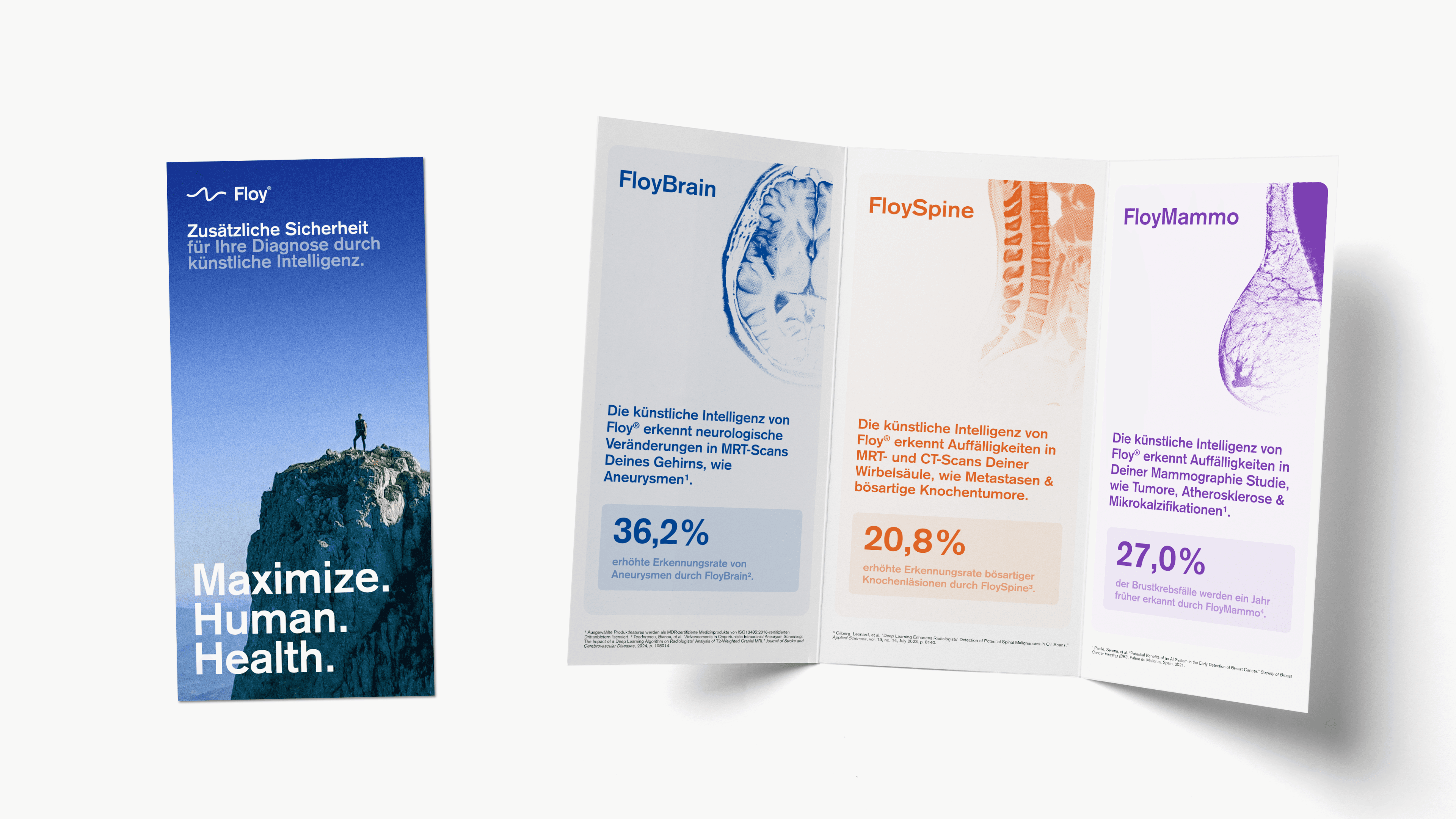
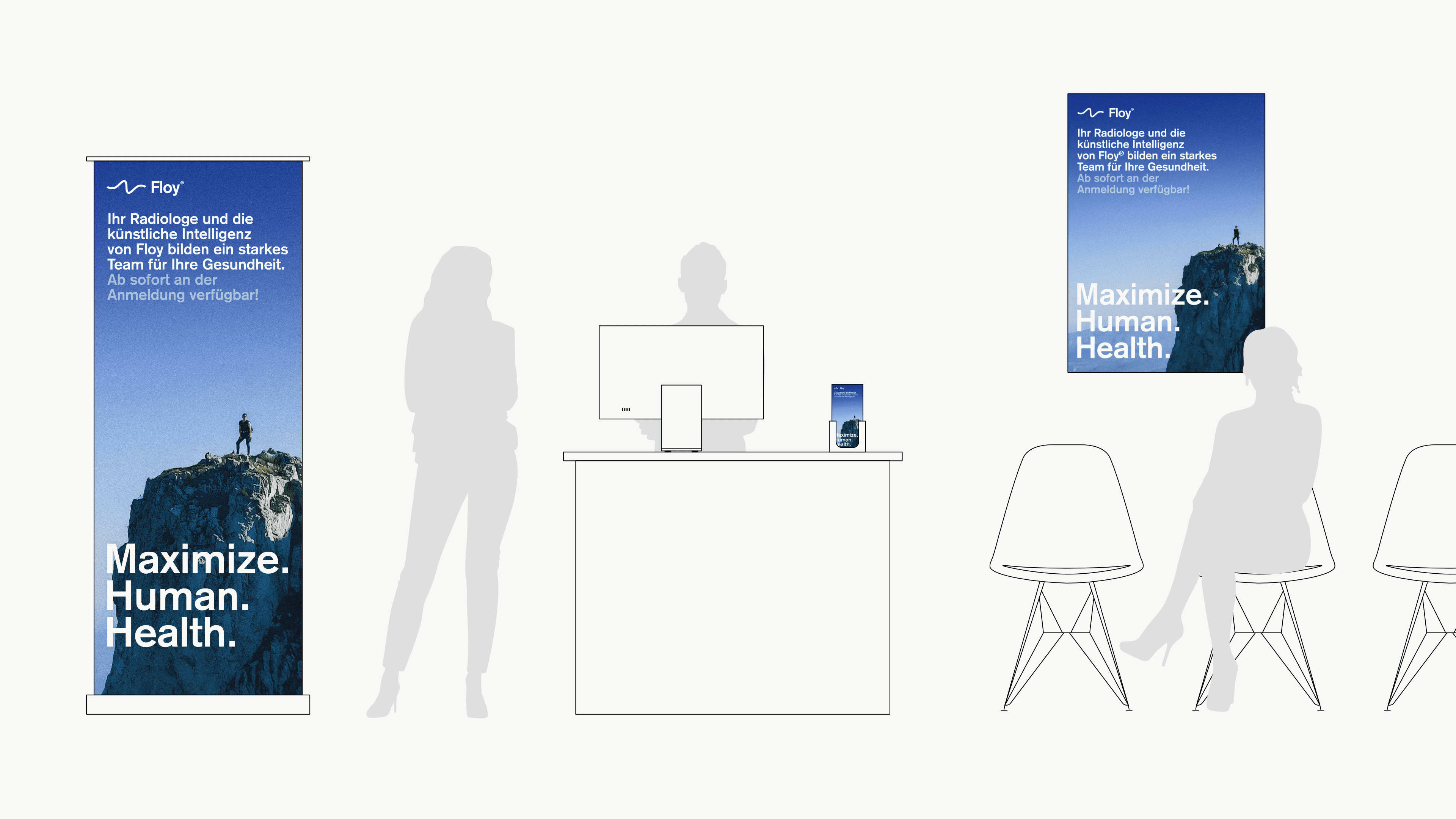
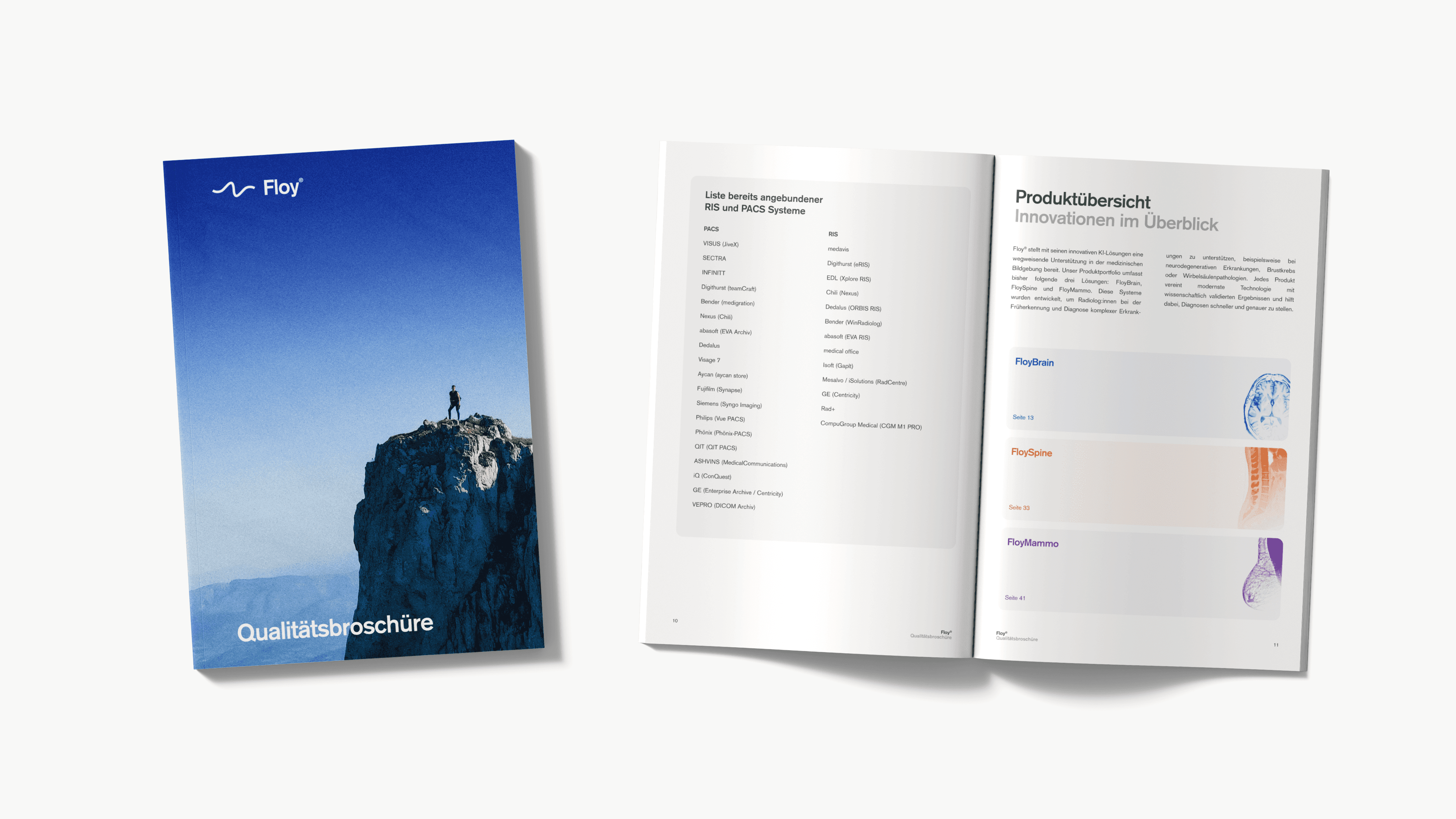
Rebranding. We designed a new identity for Floy that connects the precision of modern scanner technology with a visual language that can hold up across clinical, commercial, and investor contexts. The result is distinctive in a market that tends toward the generic and built to grow with the company.
Fractional CTO continuity. After the initial transformation, we continued with a Fractional CTO mandate, embedded in the leadership team through an active growth phase, maintaining the strategic and technical coherence that enables Floy to move fast without accumulating new debt.
Outcomes.
In February 2025, Floy closed an extended seed round of €9 million. The company now partners with over 200 radiology offices across Germany, scanning hundreds of patients daily. Floy holds EU MDR Class IIb certification alongside ISO 13485 quality management standards, among the most rigorous conformity requirements for medical devices in Europe.
The rebuilt platform and its AWS architecture were documented in a joint blog post with AWS on the AWS Public Sector Blog, “One scan, many findings: Floy's foundation model platform for opportunistic screening on AWS” (August 2026), co-authored by Floy's engineering leadership and the AWS healthcare team.
Lessons.
Founding-era decisions compound. The brand, architecture, and early hires established in 2021 shaped what Floy could become, for better and for worse. Getting those calls right at the start, when almost nothing is certain and the temptation is to defer the hard decisions, is one of the highest-leverage things an operator can do for an early-stage company.
Structure is a product decision. The squad-based reorganisation was the architectural change that made the product rebuild possible. How a team is organised determines what it can build.
Rebuilding a live system demands sequencing over speed. With clinical customers depending on the product daily, the order of operations mattered as much as the work itself. Knowing what to stabilise before what to change is an operator skill.
Brand and technology are the same signal. In medical AI, a company's identity is part of how clinicians and procurement teams assess trustworthiness. The rebrand was the same argument as the the product work, made visually.
Fractional leadership works when it's embedded, not advisory. The Fractional CTO mandate works at Floy because it carries honest ownership of architecture decisions, team structure, and delivery outcomes. The value wasn't just access to judgment. It was judgment applied inside the system.